
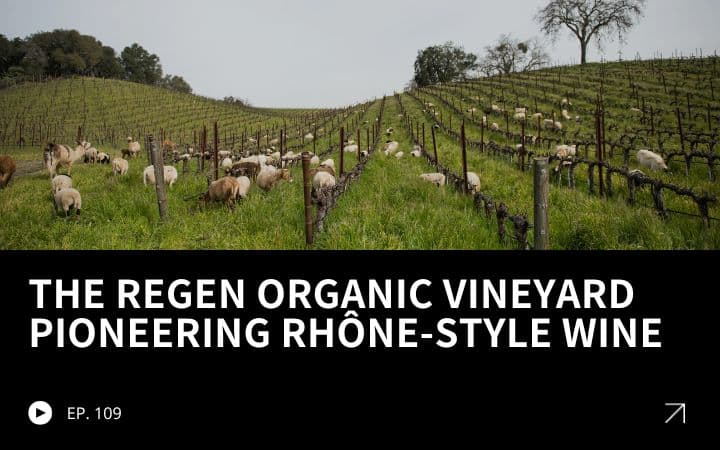
The Regenerative Organic Vineyard Pioneering Rhône-Style Wine
In this episode, Anthony sits down with Jason Haas, Partner and General Manager of Tablas Creek Vineyard — the first winery in the world to achieve Regenerative Organic Certification. Located in Paso Robles, California, Tablas Creek is not only producing Rhône-style wines with a deep sense of place, but is also helping to set the bar for regenerative farming in the wine industry.
From French Roots to Paso Robles Innovation
Born from a partnership between Jason’s father and the Perrin family of Château de Beaucastel in France, Tablas Creek was founded with a simple but bold mission: bring the grapes and traditions of the southern Rhône to the U.S., and farm them in a way that honors both terroir and ecological integrity. That mission eventually led them to import rare grape cuttings, build an on-site nursery, and establish their own supply of elite Rhône varietals.
“We realized that several of the traditional Rhône varieties had never even been used in America before... so we built a grapevine nursery and brought them in ourselves.” – Jason Haas
Grapes, Groundcover, & Grazers: The Real Work of Regenerative Viticulture
While the wine world has long embraced organic and even biodynamic principles, regenerative viticulture is a newer frontier — and it’s not without its challenges. Jason unpacks how their location in dry, hot Paso Robles makes no-till difficult due to water competition and burrowing pests. Their approach to regen is practical, test-driven, and rooted in long-term soil health.
One of the biggest wins has been the integration of grazing animals — specifically sheep — which help manage under-vine growth, cycle nutrients back into the soil, and boost water retention.
“Animal integration has helped with everything. We started with 25 sheep in 2012 and now graze 200 through our vineyard.” – Jason Haas
A Smart, Segmented Sales Strategy
Unlike many wineries that rely heavily on distributors, Tablas Creek has built a highly diversified sales model — one that provides both resilience and brand equity. Roughly 25% of their wine is sold through each of four main channels: wholesale to restaurants, wholesale to retailers, wine club subscriptions, and direct-to-consumer sales. But while DTC represents just half the volume, it accounts for 80% of revenue.
This model not only allows for stronger margins, but also creates deeper customer relationships and greater control over storytelling — including how they communicate their regenerative and organic practices.
“Even though it's only half of our volume, direct-to-consumer drives 80% of our revenue.” – Jason Haas
Helping Growers Transition, One Block at a Time
Jason and his team realized that producing Rhône-style wines at scale required sourcing grapes beyond their estate. That meant working with other local vineyards — many of whom were not farming organically. In response, they launched a thoughtful transition program: offering a 10% price premium, viticulture support, and a 5-year window to move toward certified organic practices.
What they thought would take years happened in just two. By 2024, all of their contracted growers had shifted acreage to organic farming.
“We told growers in 2022 that they had five years to transition... and by last year, they’d all done it.” – Jason Haas
The Bigger Picture: Regenerative Wine & Category Transformation
Jason believes regenerative organic certification gives a framework and language to the kind of farming they’ve always done. But it’s also a tool to educate consumers and differentiate in a crowded marketplace — especially as more wineries explore claims around sustainability. Still, he’s realistic about the limitations in retail, where price sensitivity often outweighs farming methods.
Despite that, he sees growing interest — especially among DTC customers, sommeliers, and buyers who are starting to ask smarter questions. And as regenerative becomes more mainstream, he hopes Tablas Creek can serve both as a standard bearer and a bridge for others in the wine industry.
“ROC gave us a defined set of protocols that helped us describe what we’ve already been doing.” – Jason Haas
How We Get Regenerative Brands to 50% Market Share by 2050
For regenerative products to move from niche to norm, Jason believes the most effective path is through marketing efforts that lead with consumer self-interest, instead of altruistic social or ecological benefits. While Tablas Creek is deeply committed to regenerative organic farming, Jason is clear: most consumers aren’t buying because of certifications or ideals. They’re buying because the product is exceptional.
“With wine, it’s easier — people already expect it to reflect a place. So if we farm better, we’re almost certainly making a better product. That’s the story.” – Jason Haas
He cautions against leading with altruism. Instead, brands should highlight how regenerative practices actually make the product more flavorful, more interesting, or more distinctive.
This ReGen Recap was written by Anthony Corsaro with the help of Chat GPT
You can check out the full episode with Jason Haas @ Tablas Creek Vineyard HERE
Subscribe to future episodes of the ReGen Brands Podcast on Apple Podcasts, Spotify, or YouTube. You can help support our mission of growing regenerative CPG brands with a 5-star rating!
Stay engaged in the conversation by subscribing to our weekly newsletter, The ReGen Brands Weekly, and connecting with us on LinkedIn: ReGen Brands and AC