
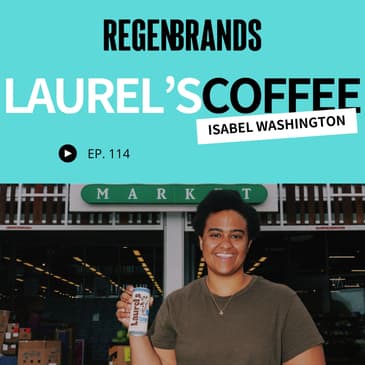
On this episode, we’re talking with Isabel Washington, the founder of Laurel’s, a rapidly growing ready-to-drink coffee brand powered by regenerative A2 dairy.
We dive into Isabel’s personal journey discovering A2 milk, how it transformed her relationship with dairy, and why it became the cornerstone of her brand.
You’ll hear how she spotted a massive gap in the RTD coffee aisle — where 90% of products were non-dairy — and why she designed Laurel’s first three SKUs to reflect what people actually order at real coffee shops.
Isabel also pulls back the curtain on the scrappy, behind-the-scenes grind of building a CPG brand from scratch — from tying up all her money in the first production run to grinding through 40 demos in 50 days at Erewhon.
And we talk about the bigger picture — how content, culture, and motivated moms will determine the future of regenerative food and beverage.
Episode Highlights:
💡 Isabel’s A2 dairy awakening
🥛 Reclaiming dairy for Gen Z and Millennial women
🤔 Why RTD coffee had become 90% non-dairy
🧃 Moving from idea to shelf in just 8 months
🧋 Designing SKUs around what consumers actually drink
🏪 Driving early growth with 40 demos in 50 days at Erewhon
🌱 Prioritizing regen sourcing, even without marketing claims
💵 The complexity and cost of product certifications
📈 How social media content will determine regen awareness
🛍 Why motivated mothers are the most influential shoppers
Links:
If you find this content valuable, please consider donating to support our work
Follow ReGen Brands on LinkedIn
Subscribe to the ReGen Brands Weekly newsletter
Episode Recap:
ReGen Brands Recap #114 - The Regenerative A2 Latte Disrupting RTD Coffee - (RECAP LINK)
Episode Transcript:
Disclaimer: This transcript was generated with AI and is not 100% accurate.
00:34
Anthony Corsaro
On this episode, we're talking with Isabel Washington, the founder of Laurel's, a rapidly growing ready to drink coffee brand powered by regenerative A2 dairy. We dive into Isabel's personal journey discovering A2 milk, how it transformed her relationship with dairy and why it became the cornerstone of her brand. You'll hear how she spotted a massive gap in the RTD coffee aisle where 90% of products were non dairy. And why she designed Laurel's first three SKUs to reflect what people actually order at real coffee shops. Isabel also pulls back the curtain on the scrappy behind the scenes grind of building a CPG brand from scratch. From tying up all her money in the first production run to grinding through 40 demos in 50 days at Arowan.
01:18
Anthony Corsaro
And we talk about the bigger picture, how content, culture and motivated moms will determine the future of regenerative food and beverage. Isabel keeps it real, brings the laughs, and drops plenty of wisdom. Let's dive in. What's up, everybody? Welcome back to another episode of the ReGen Brands Podcast. Very excited today to have my friend Isabel from Laurel's Coffee joining us. So welcome, Isabel.
01:41
Isabel Washington
Thanks for having me.
01:43
Anthony Corsaro
It's great to have you excited to talk about some very tasty A2 lattes today. I was super excited, I think the first time I saw you and your brand and your products. Isabel was on LinkedIn and then had a chance to chat with you via Zoom and then saw you at Expo west and kind of kept in touch since. And I love that you're bringing kind of regen A2 dairy into this category. It's sorely needed, I think for a lot of the coffee consumers that you will break down much more eloquently than I. But also just to get more return of A2 dairy back into people's diets I think is a game changer. So anyway, for those that are not familiar yet with the brand, just share briefly what y' all produce today and where can people find those products? In what stores?
02:26
Isabel Washington
Yes, of course. So we make A2 dairy lattes made with regenerative A2 dairy. We have three SKUs or flavors as they're commonly called. Classic, dirty chai and matcha. The idea being that most of the coffee category is a variety of things, but one thing that it is a lot of the same legacy flavors. It's the mochas, the salty caramels, the vanillas. And that's not what people are actually getting when they go to the store. Like, I don't know about you, but I don't know the last time that I got a salted caramel latte when I went to my neighborhood coffee shop, I probably got either a dirty chai or a chai or something with a cream top or a matcha or something kind of fun like that. And I wanted to build something new and exciting and fun that people couldn't get anywhere else.
03:16
Isabel Washington
So that's the gist of it. We're sold in around a thousand doors right now. The foods nationwide being our current rollout, it's happening. We're adding doors as we speak, which is pretty crazy to log in every morning and go into the portal and see another door that's scanning product. So. Yeah, but besides that, we're in, you know, the Erewhon, Hersel Farms, Delson's of the World, Wegmans on the East Coast. And then we're also, you know, the box trots and good eggs and Berkeley bowl and all of our friends there.
03:45
Anthony Corsaro
Nice. Yeah, it's very impressive. I think, what you've accomplished. You really just launched the brand in, what, January of 24. So it's only been a year and.
03:52
Isabel Washington
A. Yeah, so I started working on it in January of 24. We launched in August of last year. So it's been. We just celebrated one year.
03:59
Anthony Corsaro
Yeah. So really just a year out in the market. So congrats on all that. That's. That's amazing. And clearly what you saw in the Gap as a gap in the categories resonating with consumers. But before we dive into that, I think that's largely informed by your personal story and history as kind of a user of these products or products like it. So take us back. Give us a little bit about your background, why you started this brand and. And what you really saw as a consumer that led you to produce these products.
04:28
Isabel Washington
Yeah. So my journey with A2 actually started with Alec's Ice Cream, who I know is a friend. And I. I cannot thank him enough for a variety of things. I mean, he's become a friend, but he really was kind of the first pioneer that. I'll say where I looked into the market and I grew up dairy insensitive. I usually tell people that I went from breast milk to soy milk and. And then to almond milk and then to oat milk. And, you know, it's all of the things. And I. Alex popped up, I mean, very early. I also am pretty early on things in general.
05:01
Isabel Washington
I consumed Olipop, you know, back in high school, which is crazy that I was in high school when it launched, but I think that I Started eating Alex in college, which must have been like right around when they had launched. Yeah. And a lot of people early, very early into their journey had seen a lot of success. You know, they hadn't been able to eat dairy or guess the ice cream in 10, 15, 20 years and they could sit down, eat an entire pint of Alex comfortably. So I was like, okay, this is super interesting. I, both my mom and myself, I mean, I like love food, I love ice cream. So this was super relevant to what I was looking for at the time.
05:41
Isabel Washington
And I went to, I think it was erewhon actually, and picked up a pie of ice cream and I was like, okay, this is interesting. I can eat this entire thing. Like I'm a true believer. So that was kind of just like a blip in time. This was back in like 2021 or maybe 2022. And I actually joined consulting post grad. So when I had tried the ice cream originally I was in College at USC, graduated in 22 and then joined McKinsey and worked in the consumer space with much bigger. I mean, you have to be a billion dollar company, if not like publicly trained to hire McKinsey, but so far from the startup world. And I really enjoyed being part of those brands and seeing how they thought about consumers.
06:26
Isabel Washington
And like, to give an example, like Lululemon, they started as like yoga and leggings and women and sports bras and then they kind of moved. Now they have a men's line that honestly is better than a women's line in a lot of ways. Now they have shoes and. But at the forefront of that is like always product quality. And you can kind of think like, okay, a pair of blue lemon leggings is $120, but I think I've had the same ones for like five years versus, you know, if you go to Old Navy or Target or whatever. So I, I really like that experience. I like that they were consumer focused when you went into the stores, like you'll always have a good experience, they know your name, all of these things.
06:58
Isabel Washington
So in early 2023, when I was kind of thinking about what's next and leaving McKinsey, I knew that I was going to be, it was going to be something in food and beverage. I'd applied to kind of a ton of food and beverage brands like early stage startups, Grooms being one of them. Actually. Most notably, I got pretty far in their interview process. Shout out Chad. But I didn't end up getting any of those roles, embarrassingly enough. And Was kind of like, okay, maybe I'll just kind of do my own thing. And I, I had some savings kind of piled up for my time. I mean, it was never meant to like quit a job and not have an income. It was just like savings as you do when you're 23 years old.
07:44
Isabel Washington
And then in January of 2024, I quit McKinsey and started working on Laurel's. And I mean, it was a crazy like eight months from the very first time I ever took a picture of a grocery store shelf with coffee to, you know, being on shelf. My own brand in Erewhon, it was eight months. And it was designed that way. Like I, I didn't have the fortune of sitting on excess amounts of money. I mean, my parents are my first investors, I call them, and they definitely have written smaller checks into the company, but they weren't just going to like sit around and support my lifestyle while I, you know, built a beverage brand just kind of for fun. So.
08:29
Isabel Washington
And then I also like, you know, I kind of had the golden handcuffs in the way when I was at McKinsey and I gotten used to going on vacations and I had bought a BMW and bought a watch and live in a nice neighborhood in la and I kind of had a lifestyle to maintain that had become expensive and it wasn't conducive to not having an income. So I was like, I kind of need to get this show on the road or I'm going to have to get a real job. Like, that's really just kind of what it came down to. Yeah, I didn't have the luxury of not launching any slower. So yeah, I mean, that was. Go ahead.
09:06
Anthony Corsaro
Were you informed by the experience with A2 to then look at applying it to the coffee category or were those kind of separate things that then merged into one, like where you knew there was this gap in coffee? I mean, on the website it talks about you basically being a caffeine addict like myself and consuming all this coffee, both in college and then at McKinsey. But like, what was the. How did those two things kind of come together into what it is now?
09:29
Isabel Washington
Yeah, so I knew it was going to be a beverage. A2. I mean, kind of like thinking back, I was like, okay, like A2 is super interesting. Again, I'm early on things. I should like monetize this somehow. But I knew that people would move back to real sources of meat and dairy. Like, I knew that the whole kind of like plant based thing, it just wasn't sustainable. I mean, not Even like environmentally, like it just like was not sustainable. And there's always going to be people, my parents most notably, who never bought into it to begin with and love meat, cheese, dairy. It just wasn't going to go anywhere. So. So with that, like I had the A2 component, but it was also really important to think about, like, okay, why did I as a consumer move away from meltdown?
10:18
Isabel Washington
Like, what made me make that shift in the first place? And it was because I was experiencing real things, like, you know, the bubble guts, the indigestion, the discomfort, the gas, all those things that wasn't for nothing. Like I would drink a gas of milk and then, you know, fart for the next like six hours. That was very real. Or I would eat pizza or Mac and cheese or you know, kind of whatever it was. And with that I was like, okay, what's kind of the next avenue to put this special dairy, you know, into the market? And I wasn't gonna sell on Alex toes and do ice cream again. Like, I think that had already kind of been played out. And you said an incredible job. But the next kind of like milk abundant category was coffee.
11:04
Isabel Washington
And if you look at coffee, 85%, 90% of it is alt milks of one variety to the next, whether it's almond milk, oat milk, coconut milk, like Chamberlain coffee uses, if not, you know, black coffee, obviously not being a part of that or like sachets or however you pronounce it, the pistachio milk company, like they have their rtd, that's pistachio milk. So there's all these different types of milk or just like, you know, the low fat, cheapest milk you can find. But there wasn't really anything. I mean no one was using A2 in the category. And I felt that's where the consumption of milks, whether it's alt or you know, fluid milk, was going. So it kind of made a lot of sense for me to think about that and how we can integrate that into the product.
11:48
Anthony Corsaro
Was do you think that was also, or have you seen any data? Like, was that also driven because some of the altmux were cheaper from a cogs perspective, or was it basically just that cultural trend swing of all and now we're back into real dairy like that 80, 85 to 90% is like a very high number. Like that's a lot. Like that's the vast majority.
12:08
Isabel Washington
I think that's where the trends were. And like even, I mean, last summer at this point when I had launched Erewhon into retail. I would have conversations with people in that target demographic, you know, 25, 28 year old women who live active lifestyles and they're shopping at Erewhon and they would come up to me and be like, you know what? I am glad dairy's back. Like I don't have dairy insensitivities. I just didn't want to get judged by my barista when I would order a whole milk latte at the coffee shop.
12:36
Anthony Corsaro
Yeah.
12:37
Isabel Washington
Or my friends or you know like Starbucks was curating their entire menu and honestly still does around like oat milk and their huge partnership with oatly and like half the drinks, like they have an oat cream top and like all of these things like that just for the trends were. And brands kind of had to adapt to that. I mean, you know, the first mover, I think rise, not that they were first, but like that's kind of someone who comes to mind thinking of someone who has a ton of share in the alternative milk coffee space. Even LA cologne like they originally launched was dairy because that's where the trend was there. And now they have like one or two maybe oat milk skus.
13:14
Isabel Washington
They never really super leaned into it, which I think is a testament to the fact that dairy never went away in the first place. But yeah, that's where things were. I always say that Starbucks built the oat milk industry or the oat milk industry kind of as a whole. Like as soon as they put it on their menu, it blew up.
13:29
Anthony Corsaro
Yeah. There's a quote that you use in a LinkedIn post one time that I wrote down which was to quote you, the only RTD coffee built to reflect what consumers actually order at a coffee shop. Which you were kind of talking about this earlier, which I think is very reflective in your three like Hero SKUs right now.
13:46
Isabel Washington
Right.
13:47
Anthony Corsaro
The classic latte, the dirty chai and the matcha. And when I think about my girlfriend, my general friend group, like those are the top three things that they are ordering when they walk into the coffee shop. What led you to that realization? And maybe like why has the category not reflected that yet? Like just talk about that key category insight that has, you know, honed these first three SKUs for you.
14:09
Isabel Washington
Yeah. So it's kind of a gamble, right. Because one hand it's like, well, why am I going to make something new if I can just make another salted caramel latte? And that's been played out a thousand times in the marketplace and like Everyone understands that and knows what it tastes like. The other piece of it being, I don't think about building the brand, which is obviously a more difficult way to do it. I don't think about it as like, okay, I'm going to steal customers from Lock. Hello, I'm going to steal customers from Pop A Bottle. I think of it as, okay, you know, I'm going to introduce a customer to this aisle who walks past it because everyone walks past the cooler set and nothing has ever caught their eye. And that's why they're going to pick up the product and try it.
14:52
Isabel Washington
So the idea of that being, I mean, down to our packaging, like a lot of people are like, why is this giant cow staring at me like from across the aisle? But that sparks a lot of curiosity. And that's like very common. Yeah, there's even like to kind of go to our Matcha skew. There's only like three or four Matcha Skus that you'll find. One is Poppin Bottle, another one's Taika, and then another one might be, you know, a Japanese native brand. It's a Matcha Americano type. It's like not sweetened. There's not really an abundance there despite it being, I mean, it's blown up in the last like 18 months, let alone like kind of a trend over the past five years of general matcha consumption. So the category just like wasn't there.
15:39
Isabel Washington
And I would go in and like genuinely the biggest thing for me was like, why? What am I? What are these flavors? Like, I don't know any of this. It was unfamiliar. It was unfamiliar in a way that didn't make any sense because the entire category was that like you have 55,000 salted caramel lattes to choose from. But I don't know what that tastes like cause I never had that. So it was just super interesting to me. And then to get into like, you know, what an investor would want to hear, it's like, okay, well you know, Gen Z and younger millennial women are the largest consumers of iced coffee. The large consumers of matcha. They're the ones who are really driving a lot of this like 4th or 5th or 10th wave coffee revolution that we're seeing.
16:19
Anthony Corsaro
Yeah.
16:20
Isabel Washington
Whether it is, you know, blowing up coffee shops, even what TikTok's done has been crazy. The way that like, you know, they'll turn a 10 year old coffee shop into a line out the door the next day. So a lot of that is being driven by that demographic and they oftentimes are the ones who are willing to be a little bit more adventurous. Who. I mean look what Poppy's done. Like they're excited about brands that resonate with them and you're not really reinventing the wheel. Like I'm not doing anything net new Dirty Chai is something that people are familiar with mostly Match is new. A classic latte is really just a vanilla latte. It has vanilla extracted nut but it's not called that intentionally. So it's not the same thing on the shelf. So that was kind of the thought process behind it.
17:03
Anthony Corsaro
How do you think about like trying to convert some of those people that are going to. Would. Would typically prefer. Would typically go to the coffee shop to have the drink made instead of buying an RTD beverage. Yeah. Off the shelf at grocery.
17:19
Isabel Washington
Yeah. I think there are a lot of societal things that are contributing to it. I mean one like people will. People who are unfamiliar with RTD copy set specifically are like, oh my gosh, like $3 3.99, 4.99. Like we are at AR. Not at AR, at Whole Foods for a canned coffee. Like that's crazy. But then they go to Starbucks and you know, they'll spend $7 on a pumpkin spice latte and on a grande. Nonetheless, like that's pretty expensive. I think like the cost of living has just gotten really high that a canned coffee that can get you to like 75, 80% of the quality for half the price sometimes. And you know, half the calories, half the sugar. If not, you know, more, I guess less of those things isn't so bad.
18:02
Isabel Washington
And then where we're at as a society with like work culture and hustle and moving quickly, people just don't have time for those things anymore. Like I knowing, I mean I have great coffee shops in my neighborhood and sometimes the line's out the door and like I gotta go. I don't have time to stand in that line. And sometimes you just want something that can be with you where you are. You can pack it in your lunchbox, you can store it in the office fridge, you can drink it on the way to wherever you're going. A workout, a date. It's not a crazy amount of caffeine that you're going to be up all night. It's only 80 milligrams. So it really is kind of like an all day thing. And that's unfortunately. Unfortunately and capitalism this, that and the other.
18:47
Isabel Washington
But that's of just where we're at as a society that people really just don't have time to sit and enjoy things. So again, a lot of the product quality piece of it, we don't use vanilla flavor, we use vanilla extract, we don't use any of the artificial sweeteners. We use organic cane sugar because I really didn't want it to get as close as it could. You know, unless you're one of those people who goes and gets your five stevia latte or sugar free vanilla syrup or whatever, you go to a coffee shop and you're getting milk, sugar, vanilla extract, like you're getting real things. So I wanted to put that into the product to at least kind of give you that elevated taste profile relative to what you would get anywhere else in the aisle.
19:25
Anthony Corsaro
Take me back to the earliest days, like a year ago when you first launched in Erewhon. I mean, I feel like you were set up very well. Having sounds like you grew up in that market and you obviously had the McKinsey experience. And we all know that's like a such a great taste making retailer. What was it like in those early days, getting in there? What did you learn and how has that kind of shaped the approach as to where you are now?
19:46
Isabel Washington
Yeah, something that I definitely did not talk about or maybe I like briefly touched on it before, but when I started the brand, by the time I finally got the brand to market, I was like dead broke. Like, I had no money. I had just made bad financial decisions. Is like kind of extreme. But you know, you just like do things inefficiently because you don't know any better. We were paying a ton of money for free. We probably paid too much for cans and we paid too much for this, that and the other. And we had all of our money kind of type inventory that by the time that we got into Erwan, we had like no money. I literally had to put the slotting fee on my personal credit card because I was like, we have no money.
20:32
Isabel Washington
Like all of our money at that point was inventory or we had just spent, you know, getting regulatory stuff done, legal formulation, like all that stuff. It costs so much money. So we finally launched into Erewhon. All I was focused on was moving product and like kind of realizing some of that money back. So we launched there and I think I did like 40 demos in 50 days or something like that. Like I was in, I was texting one of my masters actually earlier this morning. Like, it was brutal. Like, so honestly so hard on my mental health. Like, it was just so rough because you're in that store for three hours. Do you want to try some coffee? Do you want to try some coffee? Like, and the rejection, like, I mean it feels so vulnerable.
21:18
Isabel Washington
No one thinks that like the founder of the company is like demoing their product in the store. So I feel like they're just so cold. Like, you know, there's people who wouldn't even look up from their like, I know you heard me. There are times where like people would like go around to not have to interact with me. And I just, I have so much more grace for people who sample things now. I always, I always hear them out. Like sometimes I'll even. I have so many things in my fridge that I bought because I feel bad for people that I'm never going to drink because I know how brutal it is out there. But that was really, I mean it was our first retailer. We had production on August 1.
21:51
Isabel Washington
To give you like a sense of the timeline we production August 1st for the first time ever. I sent samples to them, you know, the next day, August 2nd. Let's see if it got put in the mail. And then I think I heard back like by the 10th had to onboard distributors, you know. And then like by the time I finally made the shelf, it was the middle of the month or the end of the month at that point and I really just like went ham everything we could possibly do to drive trial again. We had no money though, so weren't like donating cases and like doing all these things that people do. It really was just me and my like stand up table, you know, in the store hoping that people would buy enough cans that it made sense. And then from there.
22:32
Isabel Washington
Go ahead.
22:33
Anthony Corsaro
What did you learn from that mass quantity of interactions that you did have from people that didn't just walk by? Like what did you learn about the product and the business and everything?
22:42
Isabel Washington
Yeah, I think kind of the biggest thing. Well, so there are two things. One is that people don't know anything about the food they consume. For better or for worse. It's like really, it's so crazy. I mean the amount of people who would walk by me and we actually reformulated. So we first launched, we had 10 grams of added sugar. We reformulated and now we have five. Because the like 10 to 15, like seeing it on the label just like made people sick to their stomach for whatever reason. I mean again, Erewhon is not the place to get feedback on this types of stuff. So maybe you know, there's a world in which we go back up or Like, I don't know.
23:24
Anthony Corsaro
But yeah, I mean it is and it isn't. Right. It's like you just gotta know what you're dealing with. But yeah, right, go ahead. Sorry.
23:30
Isabel Washington
Well, because there are people who would have the famous Haley Bieber smoothie in their hands and that thing has like 80 something grams of sugar in it. And they would have the nerve, Anthony, to look me in the eye and be like 10 grams of added sugar is too much. I almost strangled about a hundred people. I was like, there is no way you were gulping that down.
23:54
Anthony Corsaro
Yeah.
23:56
Isabel Washington
And you know what? They go to their hot, they go to the hot bar, get their combo plate, another thousand calories. Mind you, I'm like, hold on. So you're about to have a thousand calorie meal right now and 2000 calorie meal and you're gonna look me in the eye and tell me that 130 calories is too much for your coffee. So. And that's, I mean, you know, I think we kind of see that again, just like worth food people. So we see it more than like normal people would. But like with the seed oils thing, I mean it's the same thing. Like no one even knows we're talking about. And to the extent that they talk about it, all these potentials that people are. But so that was probably the biggest thing is that nobody knows what they're talking about the second thing.
24:33
Isabel Washington
And that super worried because again, I kind of had my preconceived notions that everyone at Erewhon was a vegan who was stick thin and like would spit on me for suggesting that they like try my latte. And that was actually not the case. It's true. It's like really intimidating.
24:49
Anthony Corsaro
Yeah.
24:49
Isabel Washington
A lot of people, again over the word begins like it happens. But a lot of people were excited that there was something that had dairy in it and very excited the product quality. Like a lot of people were very shocked that the product tasted how it did and that they tried other canned coffee is. And you know, for one reason or another, doesn't resonate or upsets their stomach or it's watery. Like one of our strongest product attributes is that we use, you know, whole full fat milk and it's creamy in a way that literally no other coffee products. I mean even if you just look at like other dairy based coffee products, A2 aside, all of them use low fat milk, like literally the cheapest like things that they could buy.
25:32
Isabel Washington
Genuinely we're out there, you know, four and a half to 5%, like, fat. Really, really good stuff because that's creamy and indulgent and, like, you remember that. And coffee, like, tastes better. Like, everything, you know, the sugar tastes better, the coffee itself tastes better. It all just tastes better. So. So we got really good feedback on that as well. That people like, A2 or not, they were just excited that something had cow's milk in it.
26:00
Anthony Corsaro
What in that experience and now, since then and the whole time the product's been to market, do you feel like, is the actual customer awareness of the A2 part? Is it like 3%, 5%, where, like, they actually know what A2 is before they consume your product? Or even maybe, like, they know what A2 is and they are seeking out your product because it's A2.
26:22
Isabel Washington
So I think it's kind of a mix. And the bulk of, like, consumer research that is done is really, like, the Instagram DMS I get as a brand. Or like, yeah. How people caption things when they post it on their story. So a lot of times, like, people are like, oh, you know, I found this. It's so cute. Or, like, you know, they'll be speaking about the product or the flavors. Like, oh, I've never seen Dirty China can before. Dirty Chance, our best seller, Dirty Chinese are bestseller at Wegmans. Funny enough, I would have never expected that, like, all three skewers are there. But I literally think it's because, like, it's familiar enough but different enough that people have some type of expectations when they go into it.
27:00
Anthony Corsaro
Yeah.
27:01
Isabel Washington
So a lot of people will kind of, like, Ms. Quote the product attributes. Like, some people will be like, oh, it's lactose free. Or, you know, even though it's, like, not. But they get the general idea that it's like, you know, gentle on, sensitive to me. Like, that's always kind of the takeaway from it.
27:21
Anthony Corsaro
Yeah.
27:21
Isabel Washington
Even if they don't quite understand the science behind why. Which is fair because I had to listen to several podcasts to understand it myself.
27:27
Anthony Corsaro
Yeah.
27:29
Isabel Washington
And there are people who I think, just like that it's milk and don't really know what a tube is or care to learn. It might be like a 30 split, I think, because we've been very intentional in, like, following Alec's Ice Cream. And of course, like, Culture Cut blew up on TikTok.
27:47
Anthony Corsaro
Yeah.
27:48
Isabel Washington
And again, like, I asked Alec the same question. Like, did people blow? Like, did it blow up? Cause it's cute. Did people, like, did it blow up because it's. The packaging's cute, the Product's great. Like, it's a genius kind of product. Or did it blow up because people like the A2 component, so that's really hard to know. There definitely are people who have, like, directly said that they're excited about it because it's a 2. Someone just messaged us on Instagram yesterday saying that they're, like, an A2 Die Hard, and they're excited for it to launch at Madison at Whole Foods in Madison, Wisconsin. And, like, all they work in, like, agriculture. Like, all of their friends are all A2 diehards and, like, this whole thing. So. Yeah, but that's, like, Wisconsin, and they just, like, love milk there.
28:33
Isabel Washington
Anyway, so there's probably a regionality piece to it as well. Nor Cal, funny enough, which probably makes sense because Blake and Stephanie have dug their roots in deep there. But it's our strongest region. I don't know. Like, this is pre Whole Foods. I don't know how it'll pan out, like, once all of that's in place. But we have almost 3x the Northern California business than we do Southern California with the exact same products. I mean, you'd think that I could make some magic happen here, but it's crazy. And I think that a lot of it is because people have familiarity with a 2.
29:10
Anthony Corsaro
Yeah. I wonder what the difference in those two markets is between how many people are back to real dairy versus still consuming mainly all. You would think they'd be pretty similar.
29:19
Isabel Washington
But I know, it's. It's so insane. I mean, like, it was launching. It was a huge unlock for our business, but it was. It's insane, the difference in volume.
29:29
Anthony Corsaro
Yeah. Well, I mean, it's clear you're honing in on the A2 and, you know, Gut Friendly piece. Cause, like, I have the packaging pulled up for those that are just, like, listening to the audio. Around the rim of the can, it says Happy Tummy Coffee. Then there's kind of a big A2 dairy sticker next to the cow that's prominently featured on the front of the can. And then under classic latte, under the flavor or skew name, it says Gut Friendly Dairy. So, like, boom, boom. You're trying to hit the customer with it in multiple different ways. Both, I'm sure, while they're trying to reach for the can and also consuming the can. So it's like very clearly, hey, this is our kind of lead attribute. When you set out to source the dairy, was it as easy as. Okay, I know. Alex. Alex.
30:11
Anthony Corsaro
Sources from Alexander. That's my first call. And My only call. Or was it more of a process than that?
30:16
Isabel Washington
It kind of. That kind of was actually what it was.
30:19
Anthony Corsaro
It's nice when it's not a crazy thing, you know?
30:21
Isabel Washington
I know. And it worked out because we first did our production run. It was right here in Southern California. They run trucks down here every week. We were exploring manufacturing facilities in Chicago or even on the east coast, and we couldn't find anyone. They weren't running trucks there to that point. I honestly don't even know if they are now. And that's not to say that you can't set up your own logistics and that type of thing. We run trucks up there now to pick up stuff all the time from them, but that's how it was. And I think we just ordered at that point. It was a single palette that we ordered from them of milk. And my co packer wanted to kill me because he had to unscrew like all like hand by hand.
31:10
Isabel Washington
I think it added like an hour and a half to production. Like literally like dump out the carton. Like the half. What are they, like half gallon cartons? Yeah, milk that I mean I literally have in my fridge right now from Whole Foods. Like literally the retail ones.
31:25
Anthony Corsaro
Yeah.
31:26
Isabel Washington
And then this volume grew. They started to do totes. Totes are like 275 gallons. Like 275 to 200 gallons of totes. And you know, now we'll buy 10 totes from them, 15 totes from them. And then once you get to like really big, which actually we buy now, but you can buy tankers as well. Take those are like the 5,000 to 7,000 gallons of milk.
31:53
Anthony Corsaro
Where, where is the region piece? I know it's not really a prominent consumer claim. You don't have a certification. I don't think you have a romance copy on pack. And I. We certainly don't see that or I don't see that as like a requirement of seeing you as part of the solution for creating demand for these ingredients and these products. But we also are very interested in figuring out how we do more kind of advanced consumer marketing. Where do you see regen and sustainability like overall in the, like claim architecture and hierarchy for your product with your consumers and maybe like the future of. Of that for. For you and the brand.
32:27
Isabel Washington
Yeah, I think for us we've been so deep and I don't know if you've like gone through that. I mean, because we're going to do the rock certification. Right. So you have to get the organic and then you go get the rock. And the organic certification process is like not for the faint of heart. It actually might be the hardest thing I've ever done in my entire life. Yeah, I mean you have to audit your entire supply chain, which it was a great like operational exercise for us to do. Like, but I mean, it's the point where I'm like calling my sugar supplier who I've never talked on the phone and being like, hey, can you guys send me your get?
33:07
Anthony Corsaro
Yeah.
33:07
Isabel Washington
And then it's like not expired, but like the certificate's out of date, so I have to call them again and be like, can you guys send me an updated one? You have to audit like my co manufacturer and do that. I had like, they came to my house because we don't have like, we don't have an office, we don't self manufacture. So they just like come to your house and sit down with you at your dining table. Literally where I'm sitting now. And we sat here for like two hours. It was like painstakingly grueling. It was awful. I was like in tears going through it because it's so many documents, things that I've never even heard of, they're asking for and it just takes a really long time. That was probably a few months ago. It cost me a lot of money. It's relative.
33:50
Isabel Washington
But it's like 1200 for the audit. And then you have to like send, you know, this person this and this person that. And so that's we're at now it's been, I mean, we've been at it for like nine months and I cannot believe that. And that's apparently like fast. So I think to kind of answer the larger question though, it's really interesting because consumers have lost trust, I think, in a lot of certifications. I mean like, organic was huge. Like in like 2015, organic was like, I mean organic was erwan. Like organic was like, you know, you can go and call up your farmer and kiss him and he's not using pesticides and like all of these things.
34:30
Isabel Washington
And then it came out like it was like exposed or something a few years ago that like, it's not like the requirements got kind of loosey goosey and things were being like labeled organic that weren't and I don't know, I mean, I think a lot of things that are regenerative are great. I don't know if the education piece is there for a lot of people for sure.
34:53
Anthony Corsaro
Most definitely is.
34:56
Isabel Washington
Super. Not yet. That's the truth.
34:58
Anthony Corsaro
Yeah.
34:58
Isabel Washington
But it is super important for us as a brand to like work with farmers who like, even like outside of certification just like practice regenerative like practices because our food just doesn't hit the way it used to. It's not as nutritious as it used to be. It's not doing for us what we're expecting it to do for us. And kind of the flip side of that is it's also not doing for the earth what it used to do for the earth, which I think is like kind of a really tough place to because you know, maybe if it was like, okay, I'm going to turn a blind eye, but at least I know this carrot is actually going to make my eyesight better or all of these benefits that it used to, but now, you know, I'm not getting better for it.
35:43
Isabel Washington
And there's probably some questionable labor practices somewhere in the supply chain and it's like full of ingredients and pesticides and all these things that are actually causing me long term health issues. What are we really doing here?
36:00
Anthony Corsaro
Yeah.
36:00
Isabel Washington
So I think. And that kind of goes back again. I understand cogs. I don't. You don't need me to tell you that Alexander Family Farms is really expensive up. Yeah, like it is. The, the fact that wholesale for a gallon of milk is $9 is like insane. Like you can literally go to Whole foods and buy 10 gallons of milk quite literally. Or I mean, maybe not anymore with inflation, but you can buy several gallons, but it's just not going to do the same things for you. And you don't know its practices and what the cows eat is what you eat and all the cortisol and all of those things.
36:37
Isabel Washington
And if you think about health from what you eat and how you eat, which again is how people should like less about calories and less about, you know, added sugar and less about all of these things. But if you think about like okay, this cow was like really stressed out, this cow got like brutally slaughtered and had all time high cortisol and now I'm putting that into my body and my kids bodies for my dog's body or whoever it is, like what is the long term benefit or guess harm that is causing versus like whether or not it's organic. Like I think that's like a moot point at this point.
37:14
Anthony Corsaro
Yeah, yeah. I mean it's well said and a lot to unpack there. I think there's like two or three threads I just want to pull out and highlight. One being I think that what I'm Hearing you articulate is like you're leading with product quality and you're leading with the consumer experience because, as you spoke to earlier, like, the vast majority of people don't know how food is made and where it comes from and probably never will. And they'll never understand a lot of the nuance that you just laid down and that nerds like you and I will talk about on this podcast. But if the product performs really well and it has whatever the desired, like, after effect or outcome for the consumer, we can at least know and trust that if we achieve that, you know, we're leaving the door open to.
37:56
Anthony Corsaro
To obviously maybe get them down that road or just to have them continue to buy the product because of that. And we know that comes from these specific agricultural practices and the fact that you've bought those ingredients and formulated the product that way. I also think, you know, we. I think I try and hold a lot of empathy for the emerging brands that are trying to do this work because it is a lot of cost and added kind of bandwidth to pursue the certifications and pursue some of the claims and to figure out how you do integrate the copy into your marketing or onto your packaging or put the certification. Where do you put, like, all of that costs money. That, as you've demonstrated in this conversation, like, is very hard to come by in these early stages.
38:37
Anthony Corsaro
And ultimately, we in the bubble can talk about how much it means to us, but to the majority of the people buying the product, it is the maybe fifth, maybe seventh, maybe eighth most important thing. And so it's kind of, to me, not fair or almost business malpractice to tell someone like you that, like, it needs to be your number one priority right now. Because that's just not true. And I don't think it's a recipe for success. So it's like, how do we celebrate your work, support your work and talk about it transparently and hope that eventually you can talk about it more overtly and have the certifications and do all that, but also acknowledge that, like, you're still helping sell more A2 regenerative organic milk. And that's fantastic. So, like, let's. Let's go. Like, that's awesome.
39:17
Isabel Washington
Yeah. I mean, and like, to that point, I'm sure this is not the only person. One of my friends from college actually was, like, you introduced me to A2. Now all I buy is Alexander. She buys their, like, sour cream and their yogurt and their eggnog and, like, all of their things. And again, like, that might not be someone who even if people look at like I don't think you saw Clover Sonoma launched A2 at nearly half the price point as Alexandra is, which is like a tough place to be frankly, when you have two. In Northern California, milk companies launched the exact same product and one is half the cost as the other.
39:53
Isabel Washington
And that's kind of where those attributes come in because beyond like product loyalty, I mean like again I still buy Alexander, but it's like are consumers willing to pay more twice the cost when there's a nearly identical. And again, Blake and Stephanie, if you're watching this, you have the best milk in the world, all of those things but you know, a nearly identical for all intensive purposes product if you don't value those things. So I think that's where it gets difficult. Like again the three P's, what is it? Products, packaging and positioning and a price or maybe 4ps but there is all of those things. And again like those four and then nutrition facts and then you know, accessibility from like, you know, is it only at Erwan or can they get it where they do their shopping?
40:42
Isabel Washington
And then you know, the flavors they like and is it resealable or not resealable? And like 20,000 consumer preferences that come before for not everyone but before people are like, oh is it organic? Let alone is it regenerative? And are you, I think that people, go ahead.
41:00
Anthony Corsaro
Are from a certification perspective, your main motivator in pursuing organic and rock is retailers are asking you for it. You think it actually matters with the consumer. You think it's a differentiator. It's, you know, will be one of the first or the first in the category. Like what are your main motivators for trying to get there with both of those?
41:19
Isabel Washington
Yeah, I think that, I mean we use ingredients that it's like a no brainer. We don't have to change any of our supply chain to be able to get that certification. So a lot of it from like a business perspective was like why are we paying a premium for all of these ingredients if we're not going to reap the benefits of the certification? Like otherwise I'll just switch to like non organic sugar, non organic vanilla extract. Like why am I going to pay whatever 10%, 20% premium, whatever it is. And another piece of that is like for some retailers, Jimbo's for example, you have to be organic to be in their set. Not that Jimbo's is going to do $1 million in revenue for us for A year.
42:01
Isabel Washington
But to think about like building out the roadmap and I'm sure you want the only ones that require that. So that's super important to us. And then I think that like there are people doing great work on the farm side specifically. Like, I think the Pangolin sisters are doing great things to awareness, to farming in general and like good practices because that's as far as the consumer really cares, like, understand. And that's the part of their story that's resonated with a lot of their consumers and they're doing great things for dairy industry as a whole. But I do think that, you know, it is going to move the needle in the same way that like seed oils are, but it's hard to like zoom out. Like, I don't know.
42:45
Isabel Washington
If I called my dad right now and asked what regenerative agriculture, like, I can't say that he would know. And he lives in la, so even within la there's like all of these bubbles.
42:55
Anthony Corsaro
Yeah, yeah, that makes sense. Like you said earlier, like, we have a long way to go in terms of awareness and actual knowledge of what it is. But I think a lot of these products and brands that are succeeding and doing a good job with that individual storytelling that is like the perfect ladder for us to build some sort of more unified cohesive narrative as a group and as an industry that we do have momentum and we do have progress and we do see, you know, growth there. I'm also extremely biased and you know, I, I need that to happen for the things that I want to see happen. So I acknowledge that bias. Let's, let's talk about future growth.
43:32
Anthony Corsaro
So my assumption is, hey, you got your three Hero SKUs and let's just go, you know, let's go get this core set of SKUs on as many doors with good velocities as possible. What beyond that or correct me if that's wrong, you know, to the next, the short term growth and then I maybe long term growth after that looks like. What do you think?
43:52
Isabel Washington
Yeah. So I think for me, I am super excited and like, I don't think that I think about Laurel's as a coffee company. Funny enough. I, I love actually what Chobani has kind of done in their acquisition of LA Cologne and their, you know, billion dollar investment in a dairy plant upstate New York or however much money they spent on it. Because I do think that like I'm bullish on dairy and I don't think like my first time with the brands I Was like, I want to reclaim dairy for Gen Z and younger millennial women. The same way that Poppy has reclaimed soda for that same demographic. Because it is like, again, I only literally have a Poppy right here. It's like soda's back, you know, like it had.
44:42
Isabel Washington
And I was like the poor demographic because I was the person who was like, I turned, I don't know, 14 or 15 and I was like, so does a lot of sugar in it. Like I don't want to go out to eat and down a Coke like that just add 300 calories to my meal.
44:57
Anthony Corsaro
Yeah.
44:57
Isabel Washington
And then it was like the sparkling water became huge and it was like the Lacroix and the Bubblies and you know, or a Bora and like all those brands started to make a lot of sense. And then like Poppy and Olipop launched alongside several others. But that's where I was like, okay, obviously this is not like this lemon lime. Poppy is not a mountain or not a mountain. It's not a Sprite. Like if I really want to Sprite, I'm going to go to the gas station and like buy a Sprite. Yeah, but you can drink it every day. You can drink multiple, honestly every day and like you would still be fine. It's 4 or 5 grams of added sugar. Like it's very approachable. There's few people, unless you literally only drink water who like won't drink this.
45:45
Anthony Corsaro
Yeah.
45:46
Isabel Washington
And it really did like reclaim soda and I think that's where Gary is headed. That's why I want Gary to be headed anyway. And it's not without the work that again, the pangolin sisters and Alec's Ice Cream. Again, not that their thesis is to like reclaim dairy, but who would have thought that like 30 year olds, I mean guess how old they are. Where like 35 year olds would like be launching dairy based companies. So there's a lot of product lines that excite me. Like creamer's super exciting to me because really the only nation you see there is in Chobani. There's not. Or like, you know, there's. Every dairy farm has a creamer product, but it's just like heavy whipping cream. Like it's not flavored. It's not, you know, not that protein is.
46:35
Isabel Washington
Like I would probably make a protein creamer that's not our brand, but like there's not.
46:39
Anthony Corsaro
My 28 year old girlfriend is obsessed with the Chobani creamer. So that's the marketing tone right there.
46:44
Isabel Washington
They're delicious. Like they're, they crush that product. So Mac and cheese is super interesting. I don't know if you've seen Boscow. No, it's super small. You can only order online. But they actually do A2 Mac and cheese, so. And A2 cookies. Funny enough, cookies and Mac and cheese.
47:07
Anthony Corsaro
Nice.
47:09
Isabel Washington
And you know, protein, a protein. RTD is super interesting to me because it'd be like a relatively low lift, all things considering, but I don't think that I'd probably launch something higher margin like creamer than launch another like single serve beverage. But multi serve could be interesting. But again like these are all kind of other channels and then like, you know, the North Star being like, I don't know, like Mac and cheese or cinnamon rolls or like something that you wouldn't even think of has dairy in it or like pizza even like all of these things that people usually sacrifice the tummy ache for. That's not necessarily like, you don't need to like, what if you just like didn't need to.
47:50
Isabel Washington
Which I think is what Alex does a great job at, is that, you know, it's not just like, I mean the flavors are insane. Like you don't need to go to Jenny's or Ben and Jerry's or Van Leeuwen to have like an absolutely indulgent, insane pint of ice cream. Like you can get that here and you can also not shit yourself after. Like the two things can be real.
48:14
Anthony Corsaro
It's so funny because the difference in consuming that product is so different. And I'm thinking of one of my buddies from college football who's like just a giant white midwestern man who like consumes dairy, I'm sure regularly and all kinds of regular dairy. And I haven't hooked on Alex and he'll like most time I see him and be like, dude, I can just eat a whole pint and I have no like just frozen gut basically. Whereas like if I eat any other ice cream, like I'm just like down for the count the entire next morning. So I, I do want to ask one more question more about the short term. Like all this new Whole Foods distribution and I'm sure a lot of the other doors that you have recently opened or are going to open soon.
48:56
Anthony Corsaro
How do you like work on increasing velocity and increasing, you know, movement at those stores? Is it a sampling thing? Is it geotargeted ads? Like what is it like specifically in RTD coffee that works and works for Yalls products?
49:11
Isabel Washington
Yeah. So I think for us and we're going to see how this pans out over the next few months. But we try to keep dollars as close to the shelf as possible because it's easier for us to understand that return. So we haven't done like these crazy influencer gifting campaigns. We don't have billboards, like, we're not doing, for lack of a better term, like, crazy stuff like that one, because we just like, don't. I'm not going to spend like 25 grand on a billboard. Like, I just don't. We just don't have the money to spend like that. And then also, like, it's hard to know what's working and what's not working if it's so zoomed out from where people actually make their point of purchase.
49:54
Isabel Washington
Like, you can get assaulted by something a thousand times on Instagram ads and like, maybe you'll finally buy it or maybe not. But if you come across someone in demo or an end caps are great. Promos are great. We have bottleneckers. Like the things that you see in stores, like coupons. We're doing coupons like a free can on us. So anything that we can really focus on to drive trial at the point of purchase is where we're investing time and resources right now. And then once, you know, we've exhausted that, which you can honestly probably never exhaust that, like you have to do demos for years before running out of people to sample.
50:38
Isabel Washington
But then we'll kind of look to other avenues or like once the financials kind of make a little bit more sense, like you've been investing a little bit more influencer marketing, like with some tiktoker, like making content and stuff like that to just get general brand awareness. But it's not my favorite because, you know, a video might go viral, but it might go viral for people who only live 250 miles away from Whole Foods. So as we think of retail, like we're the target reviews right now. So we're interviewed for that. There's like a Kroger banner review. So not Kroger. It's way too many doors. But like a Ralph kind of like their higher end banner. And then really try and crack sprouts for next year, which would be great.
51:28
Isabel Washington
Like, once you just have more distribution, it's a lot easier to invest in those more kind of broad campaigns. But even with 540 Whole Foods, I think they're only in like 40. Only being relative. But like in 42 states. Yeah, maybe back in the day where only people in coastal Elite cities were influencers. It made sense. But even with this influencer campaign we're doing now, like, we're sending packages to people who live in, like, Arkansas or something and, like, literally don't even live near. So it's. It's hard to conceptualize that this is, like, necessarily worth the roi.
52:03
Anthony Corsaro
Yeah. And I feel like that Whole Foods consumer spends more of their wallet elsewhere than they ever have before. Right. Like, they're. They're shopping around more, and they're not just going and getting everything at Whole Foods anymore. So it's a little bit different dynamic there as well. But, I mean, what you just shared makes a ton of sense to me and follows, I would say, like, industry best practice of a brand of your stage, at your level of distribution. Like, keep those dollars near the shelf because, like, all that matters is driving that velocity and keeping those placements and expanding the strength of that kind of initial success. Let's take it to the macro, and I'll ask you our final question that we ask everybody, which is how do we get regen brands to have 50% market share by 2050?
52:47
Anthony Corsaro
Where do you see this whole region thing going in the next 25 years?
52:53
Isabel Washington
Yeah, I think that it's easy to be like, oh, education. But I think that there's a lot of people who are misinformed about their food in general. Again, to, like, talk about what were talking about earlier with the Hailey Bieber smoothie. And I think that social media is a huge part of that. Better for worse. There's. I mean, the seed oil movement started on social media. The raw milk movement, honestly got a lot of traction because of social media. Like, a lot of people. I mean, vaccines, like, whether people are pro or against them a lot on social media, like, everything is just picking up so much traction and so much information, so much misinformation spread so quickly. Like, what's the famous. The lie made around the world before the truth, like, put its shoes on.
53:42
Isabel Washington
I think that's so true in the age of digital media and content, especially with how anyone can be a content creator. Like, people will literally just get on the Internet and make videos and lie and it goes viral. So I think that, like, a lot of people, which, again, is always hard because the people who are educated in general, as in, like, have any knowledge of the people who always do, which are the people in New York and the people in LA and San Francisco and Chicago and Miami, and never the people who, like, make up. Again, not the bulk of, like, consumer spending, because obviously people Spend more money.
54:23
Isabel Washington
But, like, the people who are actually gonna move a needle forward, which are the people with, like, heart disease because they're £500 and, like, think that, like, eat donuts every day and, like, unimaginable things to, like, us in la. But, like, people like that. Do, like, people like that exist? And it's like, why people. When I talk to investors and they're like, what if, like, dairy. Like, what if dairy is a comeback as a trend? I'm like, there's people, there's millions of people who never stop drinking it. And I just don't. Like, I think those are the people that we need to educate. And it's not even. Again, like, I never want to talk about diet from, like, a calories. And, like, honestly, donuts probably wasn't even the best example.
55:04
Isabel Washington
But it's like, hey, like, if you think about your health more holistically and think more critically about the food that we're eating, where it's coming from, and there's a lot of. I mean, again, sometimes it's accessibility. The farmer's market's expensive as shit. Like, I go buy $15 small things of blueberries that I can get cheaper at Whole Foods. Like, I understand that, like, accessibility is a big component of this, right? I was a public health major. Like, I don't. I. I know these things. So. But I think that, like, again, back to, like, carrots not being nutritious as they used to be, or, like, soil quality being ass and like, all of these things. People just don't know that. I don't think that they don't care to know that, because you can go ask a mom.
55:47
Isabel Washington
Like, during one of my Erewhon demos, I met someone who was in there shopping with ebt. And I think it's great that everyone takes ebt, like, shout out accessibility for sure. But, like, she was in there with her baby and she was just. I was like, oh, do you want to try coffee? Whatever. We started talking and she was like, oh, yeah. Like, I've never been here. It's really intimidating for me, but I really want to get good food for my child. Like, people generally want to do right by their kids or by their partner. And I think that it's super important not to think that they don't want to, but they just don't know better.
56:30
Isabel Washington
Like, even when I was growing up and again, grew up to two incredible parents who love me a lot, but, like, I struggle with childhood obesity, like, I weighed more in high school than I do now, like, and they just didn't know better. Like, you know, you go, I was eating those like Diet Thins or like Wheat Thins, like all these like diet snacks and like, but also eating like Twinkies and also drinking soda and like all these things. And you can look back on it now and be like, oh my gosh, like, why would you ever kid drink soda? But that's just like what they did and they didn't know better. That's how they grew up.
57:02
Isabel Washington
So I do think that there is like a component to that where it's like, hey, you know, maybe if you can make this switch, maybe if you can buy this water filter, maybe if you can go out and like go to your farmer's market or you know, at least buy vegetables from your farmer's market or buy your meat from, I don't know, like the dollar store and buy your vegetables. Like, I do think there are like an education piece. And if you tell them these things in a way that makes sense to layman's terms, I think you'll get a lot farther. But I think a lot of these movements feel so elitist and unaccessible. And if you don't understand it, you're stupid and poor and like, this is not for you.
57:49
Isabel Washington
I think that's a lot of the issue with health in general in this country. And I think that like, that's where regenerative needs to go. Then the flip side of that is like, you know, any incentives that we can actually like, offer people, like farmers specifically people at the source, to do better will only help things as they move the chain.
58:09
Anthony Corsaro
Yeah, yeah, I love that a lot to unpack there.
58:12
Isabel Washington
Like even, I mean, even with the Alexander's, I'm like, you guys have got to get more cows. Like, like you got to get more cows. And then we like literally can't. Like, there's like constraints to the land and like all these things, like rotational farming, all these things. And I'm like, okay, so you're like kind of tapping out your like business capabilities unless you go out and buy more land, which is really expensive.
58:33
Anthony Corsaro
Yeah.
58:34
Isabel Washington
So like either you like, you can only make X millions of dollars a year or you stop being regenerative because you stop all those practices and like, at some point, I don't know, you want to grow your business.
58:45
Anthony Corsaro
So yeah, there's a lot of layers when you're talking about everything from farming and complex biological systems all the way through end product sales to a consumer. A lot of what you shared Resonated. But I think the one thing I would highlight for sure is we have got to do a better job of getting motivated mothers on board with this region thing and whatever people's opinions are on Maha and, or how this administration's actually handled creating momentum via the Maha movement. What's very clear is like informed, motivated mothers will, will do shit, right? They will, they will move. And for us, you know, selfishly, I want those people to buy as many regen products and from regen brands as possible.
59:35
Anthony Corsaro
And like you said, showing up in the places that they are receiving that information and in the dynamic ways that they're responding to that information, I think is like a constant challenge that when I try and think about actually doing it, my head starts to explode. But, but we have to do a better job of that because it's going so fast and it's just, you know, it's where. It's where all those things are being, shaping, being shaped and originating from like you mentioned. So, yeah, definitely a couple of things I'm going to spend some more time on and have been kind of ruminating on for a little while.
01:00:08
Isabel Washington
Yeah, definitely. The moms, I mean, even like seed oil movement, it's picked up traction so quickly. And if you look at like a seed oil free brand and look, you know, look at a story repost, 9 times out of 10 it's like influencer mom or like, you know, so happy to buy these for my kids or my husband or my wife for that matter, you know, kind of whatever it is. And I think that like, again, I truly believe my heart that the most like dead broke, like person mom who's just like come into an unfortunate situation, would spend her last $5 on buying her child something better if she knew that it was better for them.
01:00:48
Anthony Corsaro
Yeah. Yeah. Amen.
01:00:51
Isabel Washington
And so many people think that's like the calories in, calories out piece and like, I think that's where we kind of get stuck as a society, unfortunately.
01:00:59
Anthony Corsaro
Yeah, I agree. I think, I think there's progress there as well. I think some of this more like informed and available nutrition data and science is also gonna be helpful there. But super fun conversation. Fascinating. I really appreciate you making some time. Congrats on all the success in the very early years of the brand. I'm sure it's felt like an eternity, but you've done quite a lot in a short amount of time. If anyone wants to check out more, we'll obviously link a bunch of stuff in the show notes, but the URL is drink r e l s.com drink Laurel's.com Isabel this has been fun. I really appreciate it. Thanks for joining us.
01:01:38
Isabel Washington
Yes, thank you guys.
01:01:42
Anthony Corsaro
For transcripts, show notes and more information on this episode, check out our website regen-brands.com that is regen-brands.com youm can also check out our YouTube channel ReGen Brands for all of our episodes with both video and audio. The best way to support our work is to give us a five star rating on your favorite podcast platform and subscribe to future episodes on Apple podcasts Spotify and YouTube. You can also subscribe to our newsletter, the ReGen Brands Weekly and follow our ReGen Brands LinkedIn page to stay in the know on all the latest news, insights and perspectives from the world of regenerative cpg. Thanks so much for tuning in to the ReGen Brands Podcast.
01:02:21
Anthony Corsaro
We hope you learned something new in this episode and it empowers you to use your voice, your time, your talent and your dollars to help us build a better and more regenerative food system. Love you Guys.