
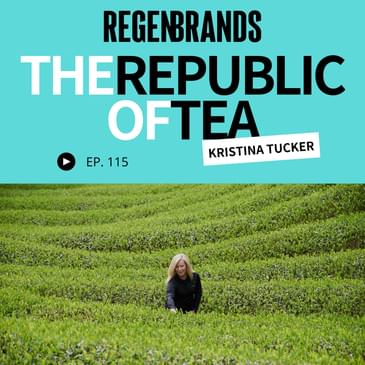
On this episode, I’m joined by Kristina Tucker, the longtime Minister of Enlightenment at The Republic of Tea.
We explore the brand’s 30-year journey from launching the first certified Organic tea in 2003 to piloting new Regenerative Organic Certified® SKUs today. Kristina shares how the company sources over 400 teas and herbs from more than 80 growing regions, and what it takes to balance innovation, ingredient integrity, and supply chain complexity at scale.
We dive into how regenerative fits into their historical sourcing evolution — from organic to biodynamic to ROC™ — and why the brand is taking a thoughtful, "wait and learn" approach to rolling out regenerative products across their massive catalog.
You’ll also hear about the product, packaging, and business decisions that have contributed to their success and longevity in the tea category, their super unique fax-based origin story, and their commitment to supporting smallholder farmers across the globe.
So pour yourself something to sip on and get ready to learn about this Republic and its Ministers, Ambassadors, Citizens, and Embassies.
Episode Highlights:
🌿 Launching the first certified Organic tea in 2003
📦 Sourcing 400+ teas and herbs from over 80 growing regions
🌍 Why they have Ministers, Ambassadors, Citizens, and Embassies
🌱 Introducing 3 new Regenerative Organic Certified® SKUs
🧑🌾 Supporting smallholder, single-origin herb farmers across the globe
🌾 Navigating volume constraints to responsibly scale regen sourcing
🫖 Delivering 30+ servings per SKU in shelf-efficient steel tins
📊 Offering customizable assortments for retail partners
📈 Launching 10–20 new SKUs annually
👏 Supporting female farmer leadership in Sri Lanka
Links:
Ministers, Ambassadors, Citizens, and Embassies
Regenerative Organic Certified®
Women of Tea Sri Lanka Program
If you find this content valuable, please consider donating to support our work
Follow ReGen Brands on LinkedIn
Subscribe to the ReGen Brands Weekly newsletter
Episode Recap:
ReGen Brands Recap #115 - Piloting Regenerative Innovation In Tea & Herbs - (RECAP LINK)
Episode Transcript:
Disclaimer: This transcript was generated with AI and is not 100% accurate.
00:13
Anthony Corsaro
Welcome to the ReGen Brands Podcast, the place for brands, retailers, investors, and other food system stakeholders to learn about the consumer brands supporting regenerative agriculture and how they're changing the world. I'm your host, AC, thanks for tuning in. Now let's get into today's conversation. On this episode, I'm joined by Kristina Tucker, the longtime Minister of Enlightenment at The Republic of Tea. We explore the brand's 30-year journey from launching the first certified organic tea in 2003 to piloting new regenerative organic certified SKUs. Today. Kristina shares how the company sources over 400 teas and herbs from more than 80 growing regions and what it takes to balance innovation, ingredient integrity, and supply chain complexity at scale.
01:04
Anthony Corsaro
We dive into how regenerative fits into their historical sourcing evolution from organic to biodynamic to roc, and why the brand is taking a thoughtful wait and learn approach to rolling out regenerative products across their massive catalog. You'll also hear about the product, packaging, and business decisions that have contributed to their success and longevity in the tea category and their super unique facts-based origin story, and their commitment to supporting smallholder farmers across the globe. So pour yourself something to sip on and get ready to learn about this Republic and its ministers, ambassadors, citizens, and embassies. Let's dive in. What's up, everybody? Welcome back to another episode of the ReGen Brands Podcast. Very excited to have my friend Kristina from The Republic of Tea joining me. So welcome, Kristina.
01:54
Kristina Tucker
Nice to be here. Thanks for having me.
01:57
Anthony Corsaro
Absolutely. Kristina, for those that are unfamiliar with the brand, as I was surprisingly as of a couple months ago, but I'm happy I'm no longer unaware of the brand because you guys have been around for a while and make a lot of awesome products that I've now had the chance to indulge in. But for those that maybe haven't tried The Republic of Tea or aren't familiar with the brand, can you fill us in on what y' all make and where can people find your products today?
02:22
Kristina Tucker
Sure. Well I'm glad to welcome you as a citizen to The Republic of Tea. AC yeah, The Republic of Tea. Best place to find the many hundreds of teas and herbs that we have is our website republicoftea.com but you can also find us at natural food stores, some specialty grocery, farmers markets, garden centers make great gifts. Plenty of options to find the Republic of the Tea.
02:49
Anthony Corsaro
Yeah and I it's now in my mind as one of the fewer really the only maybe tea brands that's in the tin. So it's not in the typical, like, tea box that you would see on the shelf, but they're in some really sleek tins. And, you know, Kristina, I gotta personally thank you. This. This interview is one of the best things that's ever happened to my romantic relationship because my girlfriend Summer is fully addicted to peppermint tea. And you were kind enough to send us some tea before the interview. And she's been. She's been hitting the peppermint tea very hard, and she's been impressed. So I appreciate that.
03:21
Kristina Tucker
Oh, I'm delighted to hear that. That's one of our favorite things, when people discover something or find The Republic of Tea as a. As a favorite option. So. And our peppermint is really good.
03:33
Anthony Corsaro
Yeah, very good here. It's very good. Kristina, you've been with the brand, I believe you told me, 22 years. The brand's been around for 33 years. I want to say I have in my notes. So y' all are not necessarily the new kid on the block, and you've done a lot of really cool stuff. But take us back to how did this brand begin and maybe where you kind of joined in some of your personal journey as well.
03:56
Kristina Tucker
Oh, thank you for asking that. It's a wonderful origin story. The Republic of Tea started as just an idea of two entrepreneurs, three entrepreneurs, actually, a husband and wife, Mel and Patricia Ziegler, who were the original founders of the Banana Republic. They, as they traveled, they discovered tea and kind of were puzzled at how difficult it was to get premium tea in the United States. And they met another entrepreneur, Bill Rosenzweig, and the three of them corresponded in the late 80s, early 90s via fax. So before email, one can imagine. And they. They would fax back and forth all of these ideas of this tea company. And it was a lot of the whimsy that we still embrace today came from these series of faxes.
04:51
Kristina Tucker
And they put them all together and they published a book called The Republic of Tea, obviously, and it is a great read. So listeners out there, if you're looking for a fun inspirational story about entrepreneurship and. And building business values, this is just a must read. So that really set the roadmap for the brand today and The Republic of Tea, we all read the book. I encourage my fellow ministers to read the book once a year or so. I try to. I don't always make it, but we still mark the book up as if there are new ideas that we actually discover in a book that was written over 33 years ago. So that is how the brand began. And the mission was to create a tea revolution. And that speaks a little bit to this whimsy that I referenced.
05:48
Kristina Tucker
So at The Republic of Tea, we're all ministers. So Mel Ziegler is the original Minister of Tea. So you'll see that in the book. And then once they started the company, there was a lot of things going on in their life and they were looking for some investment. And Ron Rubin, who read the book, was very inspired. He reached out to Mel and Patricia and it turned into a transaction. Ron bought the company from Mel and Patricia when the company was 18 months old. Ron, the company is still family owned, still private. Ron's committed to that, to Mel and Patricia to keep the company private. And now the company is run by Ron's son. Todd Rubin is our Minister of Evolution. Todd joined the company 18 years ago and then 10 years ago became the President of The Republic of Tea.
06:41
Kristina Tucker
So Todd and I have worked closely together for many years, as you mentioned. Yes, I've been with the company since its 10th birthday and I've seen a lot of innovation, a lot of progress while staying committed to those original values that echo through everything we do and certainly leads us right into regenerative agriculture when we start talking about that. But there were lots of firsts that I was a part of at The Republic of Tea and I plan to be a part of many more.
07:17
Anthony Corsaro
Yeah, love it. Thanks for sharing all that. It's really fun History. I would love for you to break down the ministers, ambassadors, citizens and embassies because there's the page on the website which we'll link to in the show notes that I think does a really fun and clear articulation of it. But you see these words used and the kind of labels used or titles used throughout the brand architecture and I think it's really fun and different. So can you break that down for the audience, please?
07:46
Kristina Tucker
With pleasure. So I'll start with my title because it's pretty fun but a lot to live up to. I'm the Minister of Enlightenment, so that means I do a lot of different things and I try to share the story of The Republic of Tea and how we try to enrich people's lives with our delicious, just great tasting premium teas and herbs. And I think we mentioned, yeah, we have close to 400 different varieties of teas and herbs, so there's a lot to choose from. So with that, we're all ministers at the Republican. You as a citizen, you defected, so welcome. You're now very special part of our special place, our whimsical, mythical place, The Republic of Tea. The salespeople out in the field, they're our ambassadors and they carry the story to our embassies, which would be our retailers out there.
08:39
Kristina Tucker
And then, yes, the most esteemed of all would be our citizens, those who sip The Republic of Tea. So we reference them. We. We're very comfortable with the vernacular internally. Sometimes we even have to catch ourselves. Like people don't know who you're talking about when you refer to an ambassador or you call a retailer. Well, you're our very esteemed embassy. I mean, partner retailer. So. But we love the language. It definitely creates a lighthearted whimsy, let's not take ourselves too seriously type of approach, which leads me to share a mantra that we live by, which is we live sip by sip rather than gulp by gulp. And that is from the book, from the origin story. And you'll. We refer to a sip by sip lifestyle, one of health, balance and well being.
09:33
Anthony Corsaro
Yeah, that's beautiful. I could, I could use a little more of that in my life. So I'm going to receive that for myself today. And the different titles, you know, ministers, ambassadors, citizens and embassies, I think that's super cool. And while like you acknowledged, there might be a little bit of a learning curve sometimes with kind of renaming things, I think once people know what you're getting at there, it's really cool and different and fun and meaningful. So it's a perfect, I feel like microcosm or illustration of what I'm seeing from the brand and the way the brand kind of wants to show up in the world. So. Yeah, thanks for breaking that down, Kristina.
10:15
Anthony Corsaro
Since you've been there over this big arc of the company, I would also assume that's kind of coincided with maybe what you've seen in like the sourcing of the actual ingredients and how claims of those ingredients and claims of like the packaging that they go into has changed from conventional to organic biodynamic. Now we have rock. And I'm sure there's been a lot there, so don't. Not asking you to cover all 22 years in great depth, but I'm curious as we maybe begin to talk about some of the sourcing and agricultural piece, like at a high level. Y' all have 400 plus items at this point. You do source organic biodynamic rock.
10:57
Anthony Corsaro
Just talk to us about the evolution that you've seen over your time in terms of like how agricultural practice have tied into the sourcing of the ingredients have tied into the finished product that you're bringing to a consumer.
11:11
Kristina Tucker
Well, I'll start with. I started with the company in January 2003 and at that time USDA Organic was just coming in to the market. So The Republic of Tea was actually the first tea company to use the US the round USDA organic seal. Wow. And so we launched a collection of tea with the USDA organic seal back then January of 2003. So when I look back and think about certifications and how we've evolved over the, over time, that's where a lot of it began. Now before that and I. We can dive into this if you like. You know, there's, there are a lot of pieces of the puzzle that play into certification.
12:02
Kristina Tucker
So before you know there are different trade organizations that need to help encourage the USDA or the FDA or other powers that be, governmental powers that be that when we have certifications and how to recognize them, how to go through the administrative side of it all. So I'll start there as that's kind of when using different certifying seals for The Republic of Tea began. Now we've come a long way since then. Now we have over a hundred of our teas and herbs are certified organic. And to your point, we have explored Demeter biodynamic certification. We've really explored so many of them and we're always just looking for the best quality. And if it has a certification, that's fantastic. And then we look towards what else is happening at origin that is. Is going beyond just sustainability.
13:05
Kristina Tucker
I kind of look at the word we want sustainability. We want to sustain the status quo. But let's go beyond that. And that's a lot of what these certifications can do. So that's what we'll lean into when we think about other attributes that some of the teas and herbs we source have.
13:22
Anthony Corsaro
Yeah, I love that answer because to me there's kind of two highlights there. It harkens back to the original problem or the original inspiration for the brand was people trying to find the highest quality teas. And we believe, I believe that, you know, if this regenerative thing is going to succeed, it's going to be pre does it because it produces the highest quality product. So the fact that it's hay, we just trying to, we're trying to find the highest quality thing that also maybe does the most good in the world. And if regen isn't that we're all kind of in trouble by getting behind this thing. So hopefully it is that and love to kind of hear that articulated and what you shared there, the recent ROK products just to get into I think three SKUs. Correct now.
14:08
Kristina Tucker
Yes, yes, there are three.
14:11
Anthony Corsaro
Yeah. How, how did those come about? What was the inspiration to, to work on those?
14:16
Kristina Tucker
We're always looking for how we can do the best, how we can go beyond. So regenerative organic certification is a natural fit. And then it was the journey to find the quality, the story, the, the volume that we could then bring to market. So we were very fortunate to find this garden in Assam, the Chatwar Garden. It's on the Bramhutra river and has a beautiful color in the cup. It's a full bodied Assam that's not harsh. Assam teas typically are made to hold milk really well. They're made to have a really strong malty finish. Whereas the one that we found is pretty balanced.
15:12
Kristina Tucker
And then of course a great attribute to it is that it carries the regenerative organic certification and that's becoming more and more important to us because it's more than just soil health that it's taking into account the welfare of the people that are at the garden and the animals. And just the whole holistic farming approach is really important to us at The Republic of Tea always has been environmental, economic and equality. All that consciousness is built into the charter of the brand from way back 30 plus years ago. So that's the story of the Assam. We have that available in our signature round unbleached paper tea bags that are very renowned to The Republic of Tea.
16:00
Kristina Tucker
And then we also put the Assam tea in an iced tea pouch so people could easily make a quart of iced tea and have a nice classic clean black iced tea. So that's, those are the first two iterations on the Assam side. And then were able to source an organic Tulsi rock certified Tulsi, also from northern India. And this is an adaptogenic herb, has a little clove like finish. This is the Krishna variety of Tulsi. It's what I'm sipping on right now. It's very calming and soothing. Wonderful to have really any time of the day. It's caffeine free. It's just a lovely herb that again carries those three key pillars of regenerative organic certification. So taking into account the environment, the animal welfare and certainly the people who are making it all happen.
16:56
Anthony Corsaro
Yeah. Yeah, I love that. And I. We maybe should have even gone into the macro a little bit with the amount of what I would call, like, sourcing complexity you probably deal with. I'm looking at my notes for. You gave me the number of countries. Last time we spoke, I think it was over 80 countries that y' all source from.
17:16
Kristina Tucker
Yes. Not all at the same time, but they're all in our repertoire because we need to have redundancy and need to be looking always for, especially when we're sourcing so many different herbs. Now, Camellia sinensis, predominantly, we're sourcing from China and India, Sri Lanka, Japan, Taiwan, maybe a few other countries that are kind of like New World tea origins.
17:44
Anthony Corsaro
Yeah.
17:45
Kristina Tucker
But those are the prime, the primary ones. But herbs. Herbs are everywhere. So we're sourcing, you know, not only from the US but different states are. Have. Have the ability to grow certain herbs really well. And then there are herbs that won't grow in the US at all. And we have to just scour the earth to find some of the. Some of these different plants that we want to be able to blend with and offer our citizens. It's very complex supply chain. Yes, A.C. yes, it is.
18:18
Anthony Corsaro
Yeah. I mean, I can't even imagine, because I'm assuming there's lots of smallholder farmers actually growing the product, then there's probably some sort of cooperative representing them. And then there might even be like some sort of manufacturing or production component attached or unattached from that. Then you got the whole logistics of actually receiving it, manufacturing it. We haven't even, you know, I don't even know if you guys self manufacture, co manufacture. So I'm sure there's a lot that goes into getting my girlfriend her cup of peppermint tea.
18:46
Kristina Tucker
Well, that's one of the easier ones because that grows in Washington State. So. But we. It is. We have a significant and dedicated team who work on our procurement. We do bring everything, for the most part. I'll make one exception. But we bring all these ingredients into the US and package here. So we have a facility in Southern Illinois where we do all of our blending and packing. The exception would be matcha in from Japan. We have that packaged and sealed over at origin. Just because one matcha gets exposed to oxygen, you're just going to, you know, the quality will get degraded. So that happens there. But everything else we're. We're doing in the US and, but that adds complexity while it. Maybe it simplifies in some way, but it. We have to Bring all of these ingredients in.
19:44
Kristina Tucker
They're all coming in from both coasts. And so transportation is. And logistics around that big part of what our procurement team does. Not to mention, of course, sourcing and keeping up with all the changes that are happening all the time from just weather is a huge factor. And then you add on all the other components. I'm sure you can imagine. So it's a very dynamic, very experienced and dedicated team that we have right now working on procurement.
20:18
Anthony Corsaro
Yeah. Whatever challenges presented themselves international procurement before the year of 2025, I'm sure have been greatly increased in complexity in the year of 2025.
20:29
Kristina Tucker
Well said. Yes.
20:31
Anthony Corsaro
Yeah. And maybe we'll get into that a little bit more later on in the show. But to. To stay on the regen piece for a second, you kind of inflected on volume, the word volume, when you were talking about the Rock Skus and unpack that a little bit more like what. Why the inflection there? What. What is like a necessity from a volume perspective just for anything that y' all do to like make it work. And it sounded like maybe there was something, there was a story to be told there on the Rock skews.
21:02
Kristina Tucker
I. The. What I was implying is as we tried to broaden regenerative organic certified teas and herbs, that's a component there because, you know, there are other tea companies that will be part of that as well. And so as we all work together, there's just, there is limited supply. There's only going to be so much harvest of one particular plant every. Every season, every harvest season. So taking that into account, we also don't want to strain the supply. So we have to make sure. And then sometimes we've had this happen. We have the. A really lovely collection of teas. Now I should. Let me just. I'm going to tangent briefly here. So at The Republic of Tea, we have numerous like mini brands within the company, over 30. So one of our, like I'll venture to say mini brands is our organic super herbs.
22:01
Kristina Tucker
So that peppermint that your girlfriend enjoys, that is part of our super herbs. So these are all organic single origin herbs. And so when you're sourcing a single origin, just like the Tulsi or the Assam tea, that does have supply constraints. So we do have to be strategic about how much we're bringing in and how much we're able to sell. So it's a very frank and honest conversation with retailers as we forecast of what we're able to do. So when I, that was what I was thinking of. When I'm thinking about regenerative organic certification and what's available as we move forward and what that's going to do to the supply chain too. Because these herbs, many of them don't multiply quickly. Some take years. So I'll just use the example of Camellia sinensis.
22:56
Kristina Tucker
So our prize tea, from seed to when you could actually harvest anything from a tea plant is at least five years. And then once you, once it's starting to harvest, you might get quarter to a half a pound of leaves that you can then take to market. That's not a lot. So, right. To scale is something we have to just be considerate of. And in that super herb collection that I mentioned, we've run into that where we've had a Sri Lankan ginger be very popular. And then suddenly it's like, okay, great, we can't sell you any more Sri Lankan ginger for nine months. Well, we can't. You can't do that. You know, it's like, well, we have to pivot. We have to find something. Where else can we go?
23:43
Kristina Tucker
And so that's what I'm talking about with regards to volume and scale and just being very sensitive to what's happening in the soil, what's happening on, you know, to our earth. Because we certainly wouldn't want to just exploit a plant. Yeah. Especially when we're moving, you know, when or regenerative organic is important to us. So. Yeah, that's kind of what I was hinting at.
24:10
Anthony Corsaro
Yeah. And we see this as a theme in almost every conversation we have. Doesn't matter what the product type or commodity it is that is trying to, that we're trying to talk about from a regen perspective. There is this, you know, chicken or egg, chicken and egg song and dance between supply and demand. And in some places we have kind of an oversupply under demand scenario. In some places we have a undersupply over demand scenario. In some places we kind of have the right match, but the pricing of the cogs and the pricing of the end product from an SRP perspective doesn't make sense. So there's definitely kind of a theme there for all of us. And then there's really a lot of intricacies and complexities based on the commodity type and even the individual skew.
24:59
Anthony Corsaro
Like, like you're saying, I would assume there's a lot of variability amongst, especially on the herb Side, maybe a dumb question coming off of that is like, the average shelf life of some of those herbs would be what? So, like, if I think about y' all trying to plan for a single harvest and then the selling of that output, 9 months, 12 months, 36 months, 5 months.
25:24
Kristina Tucker
It varies. Of course it does. Because why would it be easy? For the most part, because they're. These are. These are plants that are dried. We. We have a best sipped by date on every one of our tins of a two years from manufacturer, some herbs, three years. So we do. There is a long. Relative to other products out there. We do have a healthy shelf life and we try diligently to ship with as much of that two to three years as possible to our retailers. So we're fortunate in that. But it's always best when it's most fresh. So we want to be as close to freshness as possible. We do have the advantage in that our special packaging. These tins are airtight, they're made of steel. And there's a great sound when you open it, like the popping sound.
26:26
Kristina Tucker
And then there's all this aroma comes out because most of these teas and herbs have a lot of essential oils. So you want that experience when you first open the tin. So the advantage of our packaging is that airtight seal.
26:42
Anthony Corsaro
Yeah, it sounds like there's some nice differentiation with the actual tea bag itself and then the packaging. Is there any ability for a tea brand to differentiate in the processing of like the drying or the grinding or. I don't even know if I'm using the right terms of whatever. Or is that pretty standardized and would be the same really, no matter what.
27:01
Kristina Tucker
Oh, there can be differences for sure, because while there aren't that many processing steps, I mean, tea and herbs are not processed very much. It's most just a drying step. But there might be some. Some elements of change that can happen. I'll. I'll use an herb for an example and then I'll talk about Camellia sinensis tea for a second. So dandelion root, a very popular herb, has. Has great wellness benefits. It can just be a dried root that can be ground and put into a tea or infusion, I should say. But at The Republic of Tea, we roast the dandelion root, and that gives it a heartier taste and more body, more viscosity. So that is one point of difference. And other tea brands may choose to roast some, others don't. Some would roast it longer. So you do get.
27:56
Kristina Tucker
You can have variability on steps like that, of course, ratio is a huge variability from one brand to another. And then so then there's the whole world of Camellia sinensis. So here, you know, that's one plant that's producing all types of tea. Green tea, white tea, oolong, black tea, pu erh, it's all coming from the same plant. What makes it those different types is the terroir, how it's grown and then what steps, how much oxygen it is exposed to before it's heated and dried. So that right there creates absolutely endless types of teas and that change with every harvest, with every season. So people might be very. And this is something that we strive for at The Republic of Tea to be consistent in our flavor profiles, but is always variable.
28:52
Kristina Tucker
So, you know, rain can make a big difference in the outcome from one harvest to the next, mountainside to another, mountainside can make a difference. How much oxygen it's exposed to can be a variable. So there's a lot. And then, you know, people at home certainly can have an influence on what they do. So there's some poetic license that happens. What temperature of the water they steep the tea at. People add all kinds of things, honeys, other herbs. I get that all the time. I'm like, I like this tea and this tea all blended together. I'm like, oh, we haven't thought of that. So thanks. You might have created a new scheme for us.
29:32
Anthony Corsaro
That's awesome. That was super insightful. I appreciate you sharing all that to someone that's more of a tea novice like myself. I love the conversations that we have in this region space because in the commoditized world that we live in, we don't get the opportunity, I think a lot as consumers to even think about terroir or agricultural practices and how that affects end product quality. And in a lot of ways I have a deep empathy for both the consumers and the brands trying to get there because we just live, you know, time crunched lifestyles and everything sped up and commoditized and all the things that I think make that challenging. But.
30:15
Anthony Corsaro
But I'm curious to ask another maybe dumb question of like, is there a T Somalier that's like helping figure out a lot of the variables that you just mentioned or are they doing initial batch runs and then shipping them to you, Kristina, and you're steeping them and being like, hey, we need to do, you know, option A instead of option.
30:33
Kristina Tucker
D, like, oh my ac, that is a complicated question. So I'll answer this one way. And then you can ask me more and I'll try to give more detail. So. Well, first of all, when we're talking about tea, we're talking about a beverage that's been consumed by humans for 4000 years and has all kinds of stuff stories. But, and so much history is tied to it. And there's so. But to answer your question simply so, one of the people that I most admire in. In the tea world, his name is Roy Fong, and I've traveled to China with him. Very blessed to have had experiences like that with him. My first travel with Roy, I was bugging him.
31:24
Kristina Tucker
I mean, again, granted, I was like half my life ago, so I was very naive and kind of like, who, you're the expert and I need to learn about this and why isn't the same this way and this way? And I was asking these questions, and I know I was just irritating him. And finally, he. He responds to me. He's like, Kristina, there's no such thing as an expert in T. There will never be. There never has been, and there will never be. The T tells you it's smarter than us, and it's going to tell us what it is. So that's always stayed with me as like, well, there people can go through certifications, they can be a tea sommelier, but ultimately these plants, they're going to tell us what. What it's all about. And I think that's a lot.
32:10
Kristina Tucker
That's kind of at the essence of regenerative organics, is that these plants, they've been doing it a lot longer than we've been around. And we're trying so hard to tell them, this is how you grow. This is how much we need. This is the type I want. And then the plant does its own thing. Nature will do its own thing. So I kind of look at it at that way. That's one perspective on that. So, yes, I guess to answer your question simply, there are no experts. There is some standardization in terms of how we evaluate. There's ways to evaluate T that is very. It's subjective. But people have enough training to know different nuances, different flavor profiles to be able to go through a process. It's called cupping, and it's done at origin. We do.
33:01
Kristina Tucker
We have labs that we're cupping every day at The Republic of Tea, multiple times a day to kind of set those bench standards and then compare and contrast, because we do want to deliver the most consistent cup as possible to our loyal citizens because they expect to get a new tin and have it be just as great as what they loved the last time. So we do our best to maintain that consistency, but that can be challenging. But the cupping methodology, that's been consistent for hundreds of years of how to taste tea and measure it and then use that as a standard. And nowadays we have so much more technology, so that can come into play too.
33:42
Kristina Tucker
We can measure the moisture content, we can have a lot more data, but ultimately it all comes back to that singular experience and trying to create, replicate that for. For our loyal fans.
33:59
Anthony Corsaro
It's fascinating. And that wisdom that you just shared. I was looking at my notes for this quote from our first conversation, and I don't know if. If this was something you said or if it was something that's also echoed, maybe in marketing copy of the brand, but I wrote down. So many different types of people drink tea hyphen. What is their ritual question mark, which is, I think, indicative of how you all approach the marketplace, which is there. That that is the case. And ultimately, like, it's the tea and the individual consuming the tea at that time that are gonna, you know, harbor the knowledge of what the experience is. Is like in that moment. So I think that's cool.
34:34
Kristina Tucker
Very much so. And that ritual is different. People have different approaches to it depending on the time of day. If they're at work, if they're at home, if they're alone, if they're sharing and. And the whole world does when it comes to tea there's a lot of ceremony and ritual. And then, you know, Americans were looking for it quick in a lot of. A lot of the time. So we try to again, put that sip by sip mentality philosophy out there for everybody.
35:03
Anthony Corsaro
Yeah, well, this question's going to be challenging, Kristina, because I'm sure I'm going to ask you to basically pick a child here, pick a favorite child. But what. What is your ritual? What's your favorite tea? Your favorite group of teas? Or like, what's. What's your daily. Daily deal?
35:17
Kristina Tucker
Yes, that is very. That's the most difficult question I have. I have like the. I have the lame quick answer that I give, which I'll start with. And that is whatever's in my cup. So, like, right now I am drinking our regenerative, organic, certified Tulsi, and I love it, but I'll love whatever I choose next. And, you know, as you can see into my somewhat untidy office, there are quite a few teas behind me. And so I have access to so much, but I have as I've aged. I don't have as much caffeine after 12 o'. Clock. But I do start the day with either a hearty, usually our double Green Matcha or our Golden Yunnan, which is a black tea from Southern China. And then I, I have a lot of herbs throughout the day. So that's. Yeah, kind of a lame answer.
36:12
Kristina Tucker
Right.
36:12
Anthony Corsaro
But no, I thought it was a great answer. And, you know, for those of you, for those that can't see your background, if that's what untidy looks like, I don't know what tidy is because it looks rather tidy to me. And you got a good product catalog demonstration there. How, how do you take your Matcha? I, like, want to drink more Matcha. It, like, is all the rage these days, but I just can't get there from a flavor perspective. Like, I'm very entrenched on the coffee side. Like, I still would just prefer to have coffee.
36:44
Kristina Tucker
Well, there are lots of applications with Matcha, so, yeah, probably how I. So our double Green Matcha is very easy because it's green tea and matcha powder in a tea bag. It steeps up very easily. There's no whisking involved. And for me, I feel like I'm getting the health benefits, I'm getting some of the flavor, but not, it's not too overpowerful because if matcha tastes really grassy to you or maybe overly vegetal, then that's a nice approachable way to go about it. Another application, I mean, of course a matcha latte is a way of kind of making it a little, taking a little bit of the edge off, using a milk or milk alternative. But then we have a lot of applications. We have our Matcha single sips, which we.
37:36
Kristina Tucker
There's some monk fruit in there, so it's a little bit, has a little bit of sweetness and that you can just add to your water bottle and shake it. And so that's a really easy way. And then we, of course have various matcha powders of all the grades that you can whisk. I usually use an electric whisk, even though I know how to use a bamboo whisk. So there are a lot of ways to approach Matcha. But another way, I love to use Matcha as a culinary ingredient, so you can use it in your favorite cookie, even just if you're looking to incorporate matcha into your routine.
38:12
Anthony Corsaro
Yeah, love it. I want to segue into basically trying to articulate for the audience what's actually happening at the farm level at Origin in the tea garden specifically, I guess especially for the rock skus. And I know you've had an opportunity to travel a lot with the brand to sources of origin. I don't know if you've had a chance to go to any of the rock places yet, but I'm sure you're familiar with what's happening there. If not, you mentioned in our previous conversation and I want to just kind of tee you up to highlight maybe two or three things.
38:48
Anthony Corsaro
You know, one, what are some of the differences that you see when you go to Origin at a place that's organic biodynamic rock versus maybe like conventional or kind of just run of the mill to what's the effect you're seeing it have on those farmers in those communities? Because you mentioned that strongly to me as like something that's been deeply informative and maybe motivating from some of those trips that you have. So I'd love to just give you the opportunity to share some feedback on both of those topics.
39:17
Kristina Tucker
Great. Yeah, happy to. So I'll start just with the approach to plant life when we're talking about. I can speak best to organic because I have not been to, I have been to Assam, but that was many years ago and we have yet to physically visit the farms where we're sourcing these, this Tulsi and this Assam currently. So that being said, the difference when we are visiting organic farming is a care and an awareness for the environment. Of course, tea and many of the herbs that we source from have been growing in traditional methods for long before the industrial revolution. So they have some awareness of what it was like before pesticides and herbicides were so readily available. So when you're visiting organic farming there is a consciousness there. And so that I would say is the key difference.
40:28
Kristina Tucker
Although that being said, even where there isn't certification, they might still be farming traditionally. So I've seen that too, where it's just not certified, but it's, they're still operating. They may use some inputs that you know, would eliminate the ability to certify currently, but they might be moving towards a change. And it also what happens, it can be sophisticated in that there may be a threat that they have to get ahead of. There could be a fungus, there could be something happening. And, and in so many of the places where tea, these teas specifically and herbs grow, that's their livelihood. So it is while certification may be really important to them and there may be a premium, they can't lose their crop so that they're. We have to just be mindful of sometimes that can happen. And I've seen that happen.
41:24
Kristina Tucker
So that's kind of how I look at it from the soil perspective and their approach to farming. And then there's also the consciousness of tea plants typically can go through cultivation for 25 years or so before their yields start to decline. And then it's time to replant and, or diversify intermittently with the tea plants, plant some other crops that are complementary or that can help enrich the soil in a different way. So I would say that conscientiousness I've pretty much seen everywhere where there is an awareness of sustaining the, the harvests for a longer term. So that hopefully I answered part of that question with regards to soil. But what I'd really like to talk to is what I've seen and what the Republic of T has seen with regards to the people.
42:24
Kristina Tucker
So yeah, we, The Republic of Tea was a founding member, the first North American member of the Ethical T Partnership. And this is an organization based in London. It's been around for 25 years. So we've been active with the Ethical T Partnership.
42:44
Anthony Corsaro
Of course, it's based in London. That's very fitting.
42:46
Kristina Tucker
Right, right. As many. As many tea companies are. So There are over 40 different tea companies that are members of the Ethical T Partnership and the etp, I'll just use the abbreviation. They are devoted to catalyzing change with regards to the environment, to the economics and to the equalities in tea, recognizing that these are all areas that we need to work towards improving as tea brands. So the way I like to look at it is the members of the ETP kind of leave our egos at the door and we go in and we work together globally on the Camellia sinensis supply chain. And some of the projects that The Republic of Tea has been involved in, I'll talk about one that we started around 2016 called the Women of Tea Sri Lanka. And this was. It started as a really small scale.
43:51
Kristina Tucker
We together with the ETP wanted to learn how we can help the women in Sri Lanka learn about nutrition and how to help their wellbeing. Because the tea gardens are pretty remote and they're up there in the mountains and they have access, but they might not know all of these different foods that they can grow in this fertile soil that they have. And there were high levels of anemia. So we started there really small scale, just kind of tackling this one topic and then they started to grow all this food and learn how to sell it and create community markets. And then that led to financial literacy and these women hadn't known how to handle money before and then it just continued to grow and blossom in really help livelihoods.
44:44
Kristina Tucker
The managers of these large tea gardens started to take notice that there was change happening and it was really good. So that has led us to where we are today. We are working both we're in Assam, India. Activating women in leadership is the program now also in Sri Lanka. It's just kind of grown into that and it, this is going to help the future of T because it's giving leadership lessons to women who didn't have access to much outside of what they were, what their mothers did. And now they're learning how to be leaders. They're learning how to run the production facilities and the factories getting out there. They're learning how to operate machinery and then they're also getting lessons on building their confidence to be leaders in the tea gardens.
45:34
Kristina Tucker
This is going to affect them personally, it's going to help their families and most importantly, it's going to impact the future of tea. We need people to stay in tea. It's hard work and there are options out there. They can go down to the cities and when our workers leave, that's hard to replace, especially in these more remote areas.
46:01
Anthony Corsaro
Yeah. Wow, that's super cool. We will link to the ETP and to the specific project you mentioned in Sri Lanka. Wow. Yeah, I just, I would imagine that's super fulfilling and gratifying work that goes beyond just the purchasing of, you know, the crop that they produce. So that's really cool.
46:21
Kristina Tucker
Thanks. Yeah, we're very proud of it. We look forward to continuing to see that progress. It is definitely the most heart filling moment to see young women just taking an entirely different path that they didn't have access to, that their mothers didn't have access to. So yeah, it's pretty powerful. And that we're doing this project in Assam, India where we're sourcing the regenerative organic certified teaspoon.
46:47
Anthony Corsaro
Yeah, that's cool. That's cool. I want to shift gears and talk a little bit about the commercial piece. Obviously if the brand's been around for 33 years, you'll have figured some things out there and sold a decent amount of tea. So I want to talk about maybe some stuff in the macro and then also some stuff just specifically related to the regenerative organic SKUs. Okay. In the macro, like what could you share as like high level lessons that you think have been a big part of the brand's success commercially? And maybe could you share one or two, like specific nuances of how the CPG go to market plan or playbook or whatever changes in the tea category, like what's unique about selling tea versus something else in the store?
47:44
Kristina Tucker
Well, let's see. I think what I will start with is our commitment to innovation and always looking for new combinations, new herbs, trying to stay ahead of trends or set the trends even better. So keeping the innovation very healthy. So we've launched new delicious premium teas and herbs in the tens, twenties, thirty count a year for all these years. So we've definitely been committed to expanding that portfolio. We're not, we try to better at SKU rationalization. But to your question earlier, they are like our children, you know, and just to give a little bit more window into The Republic of Tea, maybe this is something that's unique to our commercialization, is that we won't launch it until we feel like it's right.
48:43
Kristina Tucker
So we could go through, we have gone through upwards of 80 iterations of a blend to be like, okay, we're there, we all agree this is it, this is going to be the winner. So there's a high level of commitment to quality throughout the whole go to market strategy. So I'll share innovation as a key part of it. Education is also a key pillar and that is investing in the education of our retailer partners, giving them as many tools as we can, exposing them to as much as they might want to learn about. And also when I think about education, you know, certainly we have a content rich website, but we try to put a lot of information on our labels. Sometimes that's not considered best practice to have as many words as The Republic of Tea puts on a label.
49:42
Kristina Tucker
But we want to invest in that space and give our citizens the ability to maybe learn something while they're enjoying their tea and looking at our beautiful tins. That kind of echoes back to what I wanted to share earlier is a lot of this is art. Not only like the whole procurement is art and we embrace that all the way to the artwork that we put on our tin. So maybe that's a little bit of a differentiation. And when it comes to commercialization too, as we take that approach, definitely premium, high quality, innovation, education, those are all key components. And you know, of course deliciousness and great taste, that's just critical. First stop. Yeah.
50:26
Anthony Corsaro
It's funny, I haven't been in many tea shops in my life, but I'm thinking of just like a Main street independent tea shop. Right. And when I think about. When visiting a place like that is, I think of, you know, a really sweet woman behind the counter that could tell you a thousand things about any of the SKUs. And I think about them being there being just a copious amount of SKUs. Right. And so when I think about what you just shared about the brand, it really feels like the brand and the business has been able to really capture and, like, be committed to that, like, spirit of just like the. The tea apothecary, but.
51:05
Anthony Corsaro
But also, like, scale and create a meaningful brand in the world that I'm sure has efficiency and scale and, you know, has profitability and all the things that you need to run a successful business that has the level of scale that y' all have. So I just think that's a really fun thing that it seems like the organization's doing a good job of kind of straddling both of those. Both of those needs and desires, certainly trying to.
51:27
Kristina Tucker
I mean, there's. When we think about our retailer partners, there's limited shelf space, so we have to be mindful of that. One cool nuance is our. Our tins are two and a half inches, which is smaller than many other products that are on the shelf across the store. So that's an advantage. And Also we have 36 to 50 servings per tin, so that two and a half inches on the shelf produce more servings than other packages. So those are just some of those nuances that make us a little different that I thought is worth mentioning. And we try to do that. We try to be really considerate of. Of the challenges the retailers are facing and what limits they might be going into.
52:19
Kristina Tucker
I'll also say that for the most part, we ship direct, so there gives some flexibility where one retailer can customize their assortment and be very different from another retailer. And especially over these decades, there are so many more players. There's so much more availability. What a dream. But with that comes challenges for them. And so we try to accommodate that in that there are retailers that are going to do really well with this sort of collection, and another retailer down the street's going to do really well with something very different, totally different collection. So really being able to provide a lot of options for those retailer partners to delight their customers, specifically.
53:06
Anthony Corsaro
Yeah, yeah. I would imagine there's a ton of value for your retailer, Embassy Partners in that because one, if you have a catalog of 400 products to choose from, that's probably overwhelming no matter how good of category buyers and managers you have. And two, as we've talked about a little bit and as we I think can just all assume from like demographics, especially in a country like the U.S. you know, the Main street tea consumer in Alabama is quite different than the one in San Francisco, which is probably different than the one in Wyoming, which is probably very different than the one in Manhattan. And so yalls ability to help shape those assortments and help the retailer actually curate something that's going to have a high deal of efficacy, I'm sure is of. Of great value. So that's cool to hear.
53:52
Kristina Tucker
Yes. And to your point about Matcha, well, Matcha, you know, trends very is trending everywhere now. But where the trend escalated first were the coasts, especially the west coast and Pacific Northwest. So seeing that happen, were able to lean in and see like, oh, we need to be doing more development in our Matcha category and get it to market on the west coast as fast as we can. And, and then I'll just lean in a little bit more on that innovation side too. Ac with regards to we have the ability to customize too. So if retailer a said we need a regenerative, organic, certified X T or herb.
54:41
Anthony Corsaro
Yeah.
54:41
Kristina Tucker
Well, we pride ourselves in being very agile. We will be like you will have it and we will find it for you very soon. So that we do act quite fast and we've done that year in, year out for many of our most esteemed retailer partners.
54:59
Anthony Corsaro
Yeah, that's amazing. Kristina, are y' all doing anything unique for the rollout of these rock skus? Is there any like unique social or marketing content, any exclusivity with any retailers? Are you not doing that and kind of just putting them out in the world and seeing what the feedback is like what is the specific marketing tactics around these three new SKUs?
55:19
Kristina Tucker
With these three new SKUs, it's more of the latter. We are seeing where people are understanding where they and also learning where we might need to tell the story in different context and helping people understand. I think it's really innovative brave what you're doing because I think it takes the brands to be able to tell a unified story, which is very difficult and it isn't really that unified. We all have different approaches. But to gather behind the word regenerative and move that forward is where we are right now. So that's our approach with these three T's. We brought them to market at Expo west and we're really trying to listen because we are getting feedback from our retailer partners that maybe it doesn't say regenerative big enough. Maybe we need to think about that.
56:17
Kristina Tucker
Maybe there are other changes we need to consider for it to be its most successful. So right now we're in that exploratory stage. We are seeing it come to market. We are seeing these three T's come to market. So, yeah, we're very much in a listen and learn so that we can amplify the story and the message. And that's part of why you and I are here today.
56:41
Anthony Corsaro
Yeah, yeah, it's. It's a challenge or opportunity that's brought me a lot of sleepless nights at this point because I can really succinctly and simply articulate the challenge, which is what you just said, where we have to tell a more unified story. We have to increase the consumer awareness and demand for this term regenerative. And then you could go on and on about the nuance and the complexity of actually whatever the potential solution is there because of the myriad of certifications, the myriad of product types, the myriad of categories, how consumers make different decisions in each category based on different factors. Like, it is very hard to design something in a monolith.
57:30
Anthony Corsaro
So I've just taken great value in these conversations we've had on the podcast and those not on the podcast talking to the individual brands about their individual categories and SKUs and journeys to try and make some sense of that. But it definitely is not. Is not, you know, it's not the easiest thing in the world. And I think people are kidding themselves if they don't acknowledge that the person walking down the T aisle and how the. The term reflects on their purchasing is vastly different than the person going to grab a ribeye that also has the term associated with it. Like, it's just a different. It's different categories, different purchasing decision matrix. Like probably by. By a wide margin.
58:12
Kristina Tucker
Yeah, the why is different in each category. But hopefully we're moving in a direction where I think that the educated value attribute shopper, which I assume you and I both are, it's an easier path, but that's a very small percentage, I think, in the overall. And I think people will. Are developing those values and we just have to make it tangible. And also take into account something you referenced earlier too, is that it doesn't become cost prohibitive, that it is. They're incentivized to make these choices for multiple reasons. And there isn't a limit like that.
58:56
Anthony Corsaro
Yeah. And I think 100% to that. And I am always kind of banging the drum of challenging retailers to be more a part of the solution there because I think we historically in our industry kind of just tell brands, processors and farmers go figure out that. That price parity problem or potential solution. And the retailers and the distributors, especially in our space, need to play an active role there.
59:24
Kristina Tucker
I agree.
59:25
Anthony Corsaro
You know what?
59:26
Kristina Tucker
Yeah, I was just going to comment on that. No, I just had this thought that, you know, the retailers, the distributors, all these stakeholders, their brands too, they have brand values, they have missions. So that I'd like to see that, like we all unified, contribute to it, to an overall mission here of what regenerative means.
59:48
Anthony Corsaro
Yeah, yeah. And get some sort of articulation of it into the actual unit economics because I think there's decent consensus that it has general goodwill and like, we're doing good for the world. But ultimately I think we have to move it into like some sort of much more, some higher ability to articulate it in the actual value from a hard capital unit economic standpoint, to really figure out what the lasting incentive, solution, reward, whatever is going to be. But that has a great deal of nuance and complexity, just like all the other pieces we've touched on. So I get the challenge there.
01:00:28
Kristina Tucker
Agreed.
01:00:30
Anthony Corsaro
Kristina, what's the future look like for the brand overall, for the efforts on the regen side? I'm sure that there's many secrets you cannot share with us, but is there anything that you can share or maybe preview or highlight that people should be looking out for the future from y'?
01:00:48
Kristina Tucker
All. You know, I'm supposed to prepare for that question. Right. So I have so many ways to answer it. I think. I think, you know, we will stand by all of those values I shared with you. We will continue to innovate. We will continue to keep this innovation pipeline that we have with 10 to 20 new things, just new blends, new innovations, new missions, all this deliciousness is still being created. We're steeped in 20, 26 and what we're going to bring to market. And I'm sure there'll be some surprises along the way, so stay tuned. There will be more. And I think with regards to regenerative, organic certification and just regenerative in general, you know, I don't want to not, you know, point out that we have over 100 organic teas and herbs and we'll continue to grow that.
01:01:53
Kristina Tucker
All of those collections is, you know, we'll continue to stay mindful of what the retailers are looking for what the consumers are looking for right now in the short term. In the near term, we're just so focused on seasonality. A lot of people start drinking tea in about and they just increase their consumption all the way through the winter. And The Republic of Tea is so giftable. So we have a very strong fall and even stronger holiday season ahead of us. So that's what we're looking at in the near term. But like I mentioned, 2026 is not too far off in the horizon, so we'll have some innovation to bring to market coming soon. Yeah, we try to stay on. Well, we look forward to some cool trends coming. Yes.
01:02:41
Anthony Corsaro
Yeah, I'll stop there. Nice. Well, we look forward to receiving that enlightenment when it comes to light. And hopefully some people take an opportunity to listen to this episode and gift that enlightenment and create some new citizens with some of the awesome products that they y' all create. Kristina, this has been super fun, fascinating, enlightening conversation. I will take us home with our final question which I'm excited to get your take on. How do we get ReGen Brands to have 50% market share by 2050?
01:03:15
Kristina Tucker
Well, I would say from our perspective and I referenced this earlier, it we have to figure out the how to scale piece while not exploiting or losing authenticity, just being able to find that balance. I think that's a key factor. And then in order to increase availability, it's that education piece. So I know you've heard that from other guests that you've had, but I think that's the magic and then staying committed to it, like if this is the direction that we think is of importance and a value, then we can't let go. We have to keep pressing.
01:04:02
Anthony Corsaro
Amen. Agreed. Love it. Thank you so much for the time. If people want to learn more, we'll drop a bunch of links in the show notes, but the main website is just republicoft.com and yeah, just appreciate you. You're very great speaker, very articulate and it was super informative. And thanks for spending some time with us, Kristina.
01:04:23
Kristina Tucker
So thanks. Oh, it was so much fun, AC and thank you for embracing the language and all things of The Republic of Tea. Appreciate you.
01:04:32
Anthony Corsaro
Absolutely. For transcripts, show notes, and more information on this episode, check out our website, regen-brands.com that is regen-brands.com. You can also check out our YouTube channel, ReGen Brands for all of our episodes with both video and audio. The best way to support our work is to give us a five star rating on your favorite podcast platform and subscribe to future episodes on Apple podcasts, Spotify, and YouTube. You can also subscribe to our newsletter, the ReGen Brands Weekly, and follow our ReGen Brands LinkedIn page to stay in the know on all the latest news, insights and perspectives from the world of regenerative cpg. Thanks so much for tuning in to the ReGen Brands Podcast.
01:05:15
Anthony Corsaro
We hope you learned something new in this episode and it empowers you to use your voice, your time, your talent, and your dollars to help us build a better and more regenerative food system. Love you guys.