
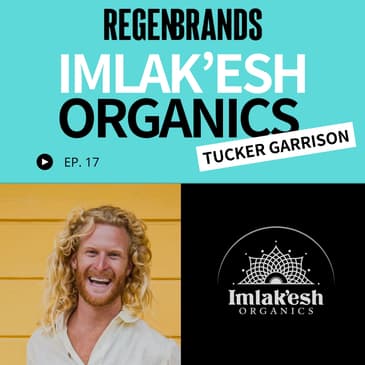
AC and Kyle chat with Tucker Garrison of Imlak’esh Organics & CHi Foods.
These two organizations are supporting regenerative agriculture through a variety of superfood offerings from Imlak’esh and the first-ever certified organic plant-based meat from CHi Foods. In this episode, we learn about Tucker’s journey living with and learning from various indigenous peoples and how it inspired him to start a CPG company. We learn about the Sacha Inchi nut, which is a regenerative, perennial superfood that powers both of these brands. Tucker is a true joy to spend time with, and we’re excited to get 2023 started off with him as our first guest.
Episode Highlights:
🤕 How Tucker’s childhood migraines led him to change his diet
🌎 Tucker’s journey living with and learning from indigenous peoples
🎁 How the name Imlak’esh was gifted to him and what it means
🤝 Building an “ethical bridge” between farmers and a global marketplace
💪 What is the Sacha Inchi nut and why is it a superfood?
🤔 The inspiration behind launching CHi Foods
⚡ How they turn Sacha Inchi nuts into plant-based meat
🤤 Why food has to taste good to change the world
👀 What is in the CHi Foods product pipeline
🥳 How “throwing a better party” will lead to more market share
Links:
Episode Recap:
ReGen Brands Recap #17 - Indigenous Wisdom & The Regenerative Plant-Based Meat - (RECAP LINK)
Episode Transcript:
Disclaimer: This transcript was generated with AI and is not 100% accurate.
Kyle Krull - 0:00:16
Welcome to the ReGen Brands Podcast. This is a place for consumers, operators and investors to learn about the consumer brand supporting regenerative agriculture and how they're changing the world. This is your host, Kyle, joined with my co-host, AC. Let's Dive in.
Anthony Corsaro - 0:00:33
On this episode we have Tucker Garrison who is the cofounder and CEO of both Imlak'esh Organics and CHi Foods. These two organizations are supporting regenerative agriculture through a variety of superfood offerings from Imlak'esh and the first ever certified organic plant based meat from CHi Foods. In this episode we learn about Tucker's journey living with and learning from various indigenous peoples and how it inspired him to start a CPG company. We learned about the Sacha Inchi Nut, which is a regenerative perennial superfood that powers both of these brands. Tucker is a true joy to spend time with, and we're excited to get 2023 started off with him as our first guest. Let's dive in. What's up everybody? Welcome back to the ReGen Brands Podcast. We are live for the 1st guest episode of 2023 episode 17. We are fired up to have Tucker Garrison of Imlak'esh Organics and CHi Foods with us today. So welcome, Tucker.
Tucker Garrison - 0:01:35
Hey, guys. Hey, Anthony, Kyle. Good to see you guys.
Kyle Krull - 0:01:39
Great to see you too, man. I gotta correct you. We're technically not live. This is gonna be prerecorded for anybody listening, so it's not a live stream.
Anthony Corsaro - 0:01:46
But.
Tucker Garrison - 0:01:47
It's.
Kyle Krull - 0:01:49
First episode of 2023, so that's still good. And I gotta say it's great to be back. It's great to have our first guest of the year. I have like a little bit like some pre nerve jitters. It's like we haven't done this in a while. We had a hiatus, yeah like basically all of November, December, but I'm pumped. This is going to be a good time. So you know for those who do not know Tucker and don't know Imlak'esh or CHi like give us a little bit of a back story about like what the product is, where it's sold, where people can find you before we start diving into the origin story and some of the other nuances about you know about the brand.
Tucker Garrison - 0:02:22
Sure. Yeah. Thank you guys. So we run actually two companies. One is Imlak'esh Organics and that's a direct trade super food company. So we work with about 2000 small family farms around the world, which I know we're going to get into. Our main products are Sacha Inchi and Makambo, which we're going to talk a lot about Sacha Inchi today, I hope. And then we have regenerative cacao that we sourced from Ecuador and and then some powders like spirulina, maca, all sorts, some small family farms around the world. Our our new uh bright and shiny project, our rocket ship is CHi Foods. So we launched the first organic plant based meat in the world, line of organic plant based meat in the world. We actually use the search engine matter that she not as the base. We're we're nationwide in quite a few retailers. Sprouts is like our probably our biggest partner. You can find all of our products for CHi and Imlak'esh at Sprouts and then you know independent grocery stores throughout the United States.
Anthony Corsaro - 0:03:22
Nice, love it, love it. We, we are definitely going to get into some of those topics. And you know, this first question is probably going to take up maybe the majority of the interview and I'm sure we'll have lots of kind of.
Tucker Garrison - 0:03:34
Questions but.
Anthony Corsaro - 0:03:35
You yourself have. You yourself has have an awesome kind of just life story, right? That kind of bleeds into both of these brands and then they're super tied together. So just take us back to to where it all started, how Imlak'esh got its start, and then how that led to CHi.
Tucker Garrison - 0:03:51
Yeah, absolutely so. You know, I think for a lot of us that end up in the natural foods industry, at some point we had some type of like health issue or complication or it was a family member or whatever it is for. For me, I actually grew up in the South, so I grew up in Charleston, SC and you know, the food culture of the South, while changing is not exactly the most healthy. And I, I grew up certainly doing my fair share of, you know, pork rib eating and it's a place where people think that like Mac and cheese is a vegetable. And I love this house, my my phone. But I'm serious. It's like on the vegetable menu. Yeah, yeah, so.
Tucker Garrison - 0:04:25
I, you know, I grew up also. We're all similarly aged, which is cool too. Like I grew up as a, you know, like a 90s kid where like the height of the like lunchable and gusher revolution was like in full swing and food preservatives, colorants, additives, all that stuff was like very much like a big part of food. And we hadn't seen the wave of like slow food movement, farmers market trend and all of the kind of like clean eating and the explosion of kind of the natural products industry. And I used to get like debilitating migraine headaches as a kid and like like terrible, terrible. Like the point where I was like completely, like bedridden sometimes for like 2 days at a time. And otherwise I was just like vibrant, athletic, healthy kid. And what I realized is that I'm incredibly sensitive to food preservatives, colorants, additives, like all that kind of stuff, which I think is actually like, what?
Kyle Krull - 0:05:29
Is you talking about where you have like the wherewithal to understand that like there's a connection between what you're consuming? And how you're feeling.
Tucker Garrison - 0:05:37
So this was going on from when I was probably like 10 or 11 until I was 19 when I had this food transformation. And you know, I could tell a very long winded story about that whole portion, but I'll keep it brief. Which basically is to say that when I was nineteen, I just kind of had this like spontaneous moment where I was like oh, I need to like get my act together with like my body, my health, everything and. Plant became plant based. Almost overnight and was vegan vegetarian for like 8 years. And just like start eating organic. And I got really into Super Foods and started really, you know, first introduced to like cacao, Maca, goji berries, like some of the more common ones. But I was like, ohh, damn. I feel really, really good. And I quit drinking the night of my 21st birthday. Drinking alcohol the night of my 21st birthday. Wow. Yeah, yeah. Which is, which is also an incredible thing.
Kyle Krull - 0:06:38
Tonight.
Tucker Garrison - 0:06:41
Have to be at the big get at the beginning of the night. Yeah. OK, yeah.
Anthony Corsaro - 0:06:45
That takes real courage.
Tucker Garrison - 0:06:47
Yeah, yeah, yeah, exactly. So. And that was like in college and everything. So it was, it was quite the journey. But I was, I was on. I can look back and be like, oh, I was on some type of path towards what I do now, but if you Fast forward. You know, two or three years later, I'm like in my early mid 20s. And I've been really like studying plant medicine, studying Super Foods and had had the privilege of living with a lot of indigenous communities that the around the world and you know. Really learning from the old ways and I, I spent some time in Guatemala with the Maya, the Khachikyan Quiche people with their RE, which are their calendar keepers.
Anthony Corsaro - 0:07:29
That's the. That's the coolest name of people I've ever heard ever. Can you please say it again? Yeah. So.
Tucker Garrison - 0:07:34
Cool. So there. Yeah, there are. There are many, many different Mayan languages. I believe there are 23 spoken, but the kitchen and the Kachiko people are like a large part of the indigenous Mayan communities. Wow. And so when I was there. The the name Imlak'esh was actually gifted to me by a by a medicine.
Anthony Corsaro - 0:07:59
Man out there.
Tucker Garrison - 0:08:00
And that that's that's how Imlak'esh, like the name of it, began. And uh, it's an incantation in that language, which means within you and other me, within me and other you. So this idea that we can only do well by ourselves if we do well by all others. And I think that that at some level is a seed of how Imlak'esh started. Like long before it was actually, you know, a company and a vehicle for regenerative transformation of of social and ecological systems, right, which is really our mission. So I'll pause there for a second because then we're going to get into the Amazon. I have a I have a distinct idea that's where we're headed so.
Anthony Corsaro - 0:08:42
That what you just shared that reminds me so much of kind of the Dr. Bronner's story and what David has shared about you know his his couple of generations ahead his great grandfather I think and just that the ethos of the brand right like and you know Kyle not Kyle doesn't drink. I took a very long hiatus. We've all kind of had this crazy health story our own. So it's it's sad that that had to happen to bring us all together but it also is like very powerful thing that has brought us all together. I'm I'm definitely very thankful for.
Tucker Garrison - 0:09:15
Absolutely. No, I really appreciate that.
Kyle Krull - 0:09:18
It's it's a super resonates like hearing your story. And I mean I don't think Anthony I certainly haven't spent much time with the indigenous tribes in other countries. But a lot of this there's a lot of parallels there. And I think you're right. Like a lot of people who end up in this industry and want to do well in this industry are here for a reason, right. And we have learned something about how our interactions with food affect ourselves and the planet. And once you sort of like pull that curtain of ignorance like away and you truly understand like how food. Impact you and how you feel and the planet is like you want to share that and get that message out, right? And if that's all we're here today, yeah.
Tucker Garrison - 0:09:52
Yeah, absolutely. And I really appreciate both of you all stories as well. And like we've gotten to know each other a little bit over over the years. So it's great to you know, be here together. And I think that part of what has happened for me and I think all of our journey is like you're saying like pulling the curtain back, but like how, how, how can you like. Kind of like decouple your, your learning and culture and Society of like what is supposed to be happening. Like what is conventional agriculture, for example, meaning normal agriculture, which, you know, we're in this little blip on the radar of what industrial petrochemical spraying, pesticides, herbicides, agriculture looks like. And that's just like one example I think of language and culture of like how are we actually transforming and like not just returning to something we were doing before, but actually innovating and creating a future. Based on old principles and that's part of what you know living with different indigenous communities has started to instill in me and I'm definitely a student and and very much learning there. So it's a it's it's an interesting journey so.
Tucker Garrison - 0:10:43
I can. I can jump in a little bit more of how we start because I want to get to chief foods. But yeah, Imlak'esh is really kind of inextricably linked. So when I was 23, I kind of threw my life for the wind and I broke up my partner, quit my job, moved out of my house and. Moved to Peru on a one way ticket in a backpack and I was I truly at that time.
Tucker Garrison - 0:11:16
Did not know if I was coming home. I was just like, I'm going, I don't know what's gonna happen to me. It was like my heart just pulled me down there and all the amazing things in my life couldn't ground me. There was something like stronger and more important that I had to do, but it literally, I had no idea what it was. And it was, it was pretty challenging. Looking back now, there are a lot of there are a lot of rough, rough early days and nights, and I ended up winding downriver.
Tucker Garrison - 0:11:22
All the way through Peru over land and then over riverboat into the Amazon and found myself eventually couple months later, about 2 1/2 three hours downriver from Iquitos, living in the jungle, studying plant medicine and once again living with no water and electricity, which I've spent probably about three years of my life with no running water and electricity and in four or five different countries. And it's it's a really cool experience to have. And I I very much enjoy it actually missing. I'm ready to go back to no running water, electricity at least for a month or two. Yeah. And so while it was in the jungle, you know, the Amazon is this absolutely incredible biodiverse, beautiful, profound place, right. There's there's 80,000 species of assertive plants. It's like fully, like a huge repository of so much of the biodiversity on Earth. And most people have this, like, romantic idea of the Amazon.
Tucker Garrison - 0:12:22
Right on Amazon rainforest. But the truth is, is that Amazon is an incredibly intense place, and literally everything's trying to kill you like you don't lean against trees. You know, snakes, termites, ants, spiders. And I was there in the beginning of the rainy season when I started living there. And so everything's migrating through the jungle. And you'd see, like, you know, you'd see like lines of like bullet killer ants or like leaf cutter ants that were literally like 100 yards wide and 10 miles long through the jungle, just like carrying biomass in the jungle. And you're like, could be part of that biomass, but it's definitely.
Tucker Garrison - 0:13:03
It's a place that changes you, but. But anyway, I just, I just wanna paint a picture for everybody of what these places are are like. So while I was there and you know, going through a lot of like hardship and growth and transformation and myself and also just a lot of inspiration, I was, I met this native woman who lived in the village next to where I was staying. And she actually introduced me to Sacha Inchi nuts and Tim Akombo beans, which are two of the foods that like were the first ones that Emma Cash brought to market. And it was this whole like, aha moment for two reasons. One.
Tucker Garrison - 0:13:41
Because the nutrition of these two foods is like such a such a powerhouse nutrition, right? Such entry has eight times the Omega threes of salmon. It has four times the protein in macadamia nuts. It's a complete protein and has all nine essential amino acids. Yeah, and it is the only nut in the world that has zero net carbs. So when we're talking about meat, meat doesn't have carbohydrates in it. And it's the only nut in the world for like a really, really amazing keto diet, you know, Paleo diet.
Tucker Garrison - 0:14:12
As well. And we call it a nut because it's truly a nut, but it's not a tree nut. So it's top 9 allergen free. So like anybody that has a tree nut allergy can also eat it. So it's just, I was kind of like, wow, wow, nobody in the Western world knows what this thing is and indigenous people have been stewarding it for literally thousands of years.
Tucker Garrison - 0:14:42
How can we create a positive relationship with this supply chain? And at some point in the jungle I committed at the time I was 23, I said I'm going to commit the next 10 years of my life to this like we're going to we're going to build a bridge. And so Imlak'esh was born December 21st, 2012, while I was living in Amazon and. I called my partner, who we'd broken up when we left. And it was just like, hey, I love you, I love you, but I got to go do this thing. He went to India. I went to Peru. And I called him and I said, hey, I love you, I'm coming home. And by the way, do you want to start a Super Foods company?
Tucker Garrison - 0:15:25
And and he was like, he was like, yeah, let's do this. So neither one of us, of course, knowing what we were getting ourselves into. And you know, it's been like a a beautiful, challenging, amazing journey of the last 10 years, right. We just had our 10th anniversary of the business and we've been together for. Almost 12 years.
Anthony Corsaro - 0:16:07
Congrats. Congrats on all that one and two. You know, there's a lot of misinformation in the world right now or disinformation or whatever the term you want to use is, but in a in a world of fraudulent superfoods, the Sacha Inchi Nut is absolutely not one of those. Those stats are the stats are unbelievable.
Kyle Krull - 0:16:29
Yeah, I I have eaten these. I have a jar of Sasha and she amicus in my pantry right now. And hearing you say those words like, I just, like, want to go eat them as we speak, you know what I mean? Like such a powerful food. It's just incredible. I was there on my desk.
Tucker Garrison - 0:16:45
It it really is. I mean they're they're incredible. Like when you eat them. And I've seen it in so many people, they have like this immediate like feeling of like ohh, I'm eating a food that's full of manna, that's full of life force, that's full of like nutrients and things that my brain and my body needs for my health right now. I've watched people just compulsively kind of like go back and go back and go back for them one, because they're delicious and the flavor is kind of like a a peanut and a macadamia nut had a baby. That's the way I would describe them. And so. You know, not only they like delicious and really versatile and different dishes, but then they're also just incredibly nutritious. And that's, you know, part of the inherent nature of the nut itself, but then also the way that they're grown. So, right. Yeah. So and you know in terms of Imlak'esh, I think the last thing I want to say just to like wrap up that piece is that really what I feel like we do is that we've built this ethical bridge between small scale farmers and a global marketplace. And so you know that that is powered by people who care about their own health and well-being and also how they're purchasing decisions are affecting other places, other people, ecosystems around the world and so we support.
Tucker Garrison - 0:17:30
About 2000 bipac farmers in five countries now Ecuador, Peru, Chile, Thailand and Lao are the countries we work in and have innovated some really incredible regenerative systems alongside farmers that know a lot more about what they're doing than we do. We're really, we're really the bridge builders, you know. So it's great to get to work with an amazing network of of farmers.
Kyle Krull - 0:18:23
When did regenerative become a part of the journey for English cash? And then how did that turn into this new vertical of cheap?
Tucker Garrison - 0:18:31
Yeah, it's a great question. You know, the the regenerative movement has been around for a while, but I think it's like the organic movement and then of course the permaculture like there's so many principles of permaculture design that are in regenerative AG for me what it really was was. That regeneration isn't just a thing that's in agriculture. It's it's a way of thinking. It's a living systems framework that gets you into the mind of what does it mean to be part of nature rather than an engineer that is like, you know, working on nature. And so again, this comes back in many ways to that's just the way indigenous people are. It's not the way they think, it's the way that they are. They are, they are.
Tucker Garrison - 0:18:48
Part of the cycle of life and what it means to do that. And so the idea of being destructive or utilizing certain practices is just not in their worldview. So I think over the last six or seven years, I've really grown into that. You know, Carol Sanford is like, you know, mayor, generative grandmother and she's been an amazing facilitator and the thinking of that process and then some some close colleagues of mine. The folks at Terra, Genesis International and Regen Network have also been really instrumental as like a as a as a thinking group and also like team of of of people really trying to innovate and move things forward on their regenerative AG side. They've been instrumental. So big shout out to them too.
Anthony Corsaro - 0:20:05
Hmm. They're great. They're doing amazing.
Kyle Krull - 0:20:10
Totally. How did this look to manifest itself in the way you're working with these indigenous people, these indigenous farmers that you have across the globe? And then how do you start telling a story via in the cache?
Tucker Garrison - 0:20:24
Yeah, absolutely. So, you know, I've pretty much spent years in my life like tromping around in the jungles of Ecuador and Peru and Thailand, like sleeping in hammocks on people's porches and like building supply chains. And you know, we work with associations of farmers, co-ops, other like minded companies and kind of like a partnership network to aggregate and source everything. And I think really, you know, at the foundation of regenerative agriculture is listening, right? You have to. You can't just like go into a place and be like this is what we're going to do and how we're going to do it. Because that's how we got where we are is like, you know, white people that look like me being like I have a good idea, let's do what I said, you know, like that's the opposite of what we're trying to do here is. You know to to build. Agriculture systems that are, that are a good fit for the place that we're growing those things and that there are farmers that have incredible knowledge about soil health and, you know, their climate and ecosystem and how things can be planted. And so really it starts with a conversation and then grows from a like, what are your needs, what are our needs so that we can actually build the whole capacity of the system and then like eventually we're getting to a place where we're building, you know, this, the soil carbon layer we're sequestering. Carbon were reforesting rainforest in certain cases for like Cal systems and taking degraded land and really like building it back into a fertile biodiverse environment and that farmers are also being paid a living wage.
Tucker Garrison - 0:21:41
For what they're producing so that they can send their kids to school and have you know, have a solid and decent livelihood and have like an engagement with the global capitalist system which is at least neutral and hopefully positive rather than kind of degenerative and destructive or extractive, right. And that's, that's really at the core of what we do. And we could spend like 10 hours talking about the nuances of each supply chain and what that means, but. Right. I think at a core like for those listening that are trying to design more regenerative systems, the only thing I can say is like you got to go there. And if you don't speak the language of where you're going, make sure you have a really good translator and somebody like like spending the time on communication is so key because that's how we build great relationships, you know. So yeah, there's there's a lot there though, Kyle for.
Anthony Corsaro - 0:22:53
Sure.
Kyle Krull - 0:22:55
Yeah, I can only. Imagine with the variety of crops, the variety of places, the variety of tribes, the different lands like every like you mentioned, every practice has to be place based because what you know like a cow farm in Columbia needs might be different than a cow farm somewhere else. Knowing it's not going to be as simple as standardizing the process and seeing what's going to what happens here has to happen there. It's all going to be different. So I think that flexibility call you mentioned is super, super critical.
Anthony Corsaro - 0:23:20
And yeah, one thing that I'm thinking of is how, how, how vastly different that is than like typical CPG today, especially like an emerging brand. They're like, hey, let's make a product, let's get the ingredient list, let's call it Co man, let's get this thing spun out really fast and like this is how we're going to produce the product. And it's like, it's like the exact antithesis, antithesis of that. And it's led to you guys having a successful profitable CPG brand, which is very, very hard to do. So kudos to you for that. And and now you're here, now you have Imlak'esh doing that. And then she comes about so why she and and why was it gonna move that work forward for you guys?
Tucker Garrison - 0:23:56
Yeah, absolutely. So, you know, we've talked quite a bit about the Sacha Inchi nut. It's it's attributes, it's flavor profiles, characteristics. And for a couple of years, honestly, I was going a little stir crazy. I was like, God, there's like there's something we need to do with this. Like, you know, we knew, we have a, we knew we have a rocket ship on our hands. You know, in terms of that nut, because it's incredibly difficult to grow, it's incredibly difficult to process. And we'd, you know, we'd crack the nut, if you will, on both of those things and, you know, over over many, many, many, many years. And a lot of, you know, a lot of really rough, rough days trying to figure it out, like banging our heads against the wall and. You know, one day it was probably, gosh, yeah, two years ago, a little less than two years ago now, I had been toying with the idea of making plant based meat out of Sacha Inchi. And I knew it was what I'd wanted to do for a while before. And I was like, Nah, it's way too crazy. Like we we're running this other company. It's like a, you know, shelf stable product. Like we're not getting into plant based meat. And then I woke up one day.
Tucker Garrison - 0:24:38
From a dream, as I often do. And I was like, oh. Alright, well this is the next evolution of my life's purpose in business is to create a plant based meat company with Sacha Inchi after doing so much R&D on all these other products with Sacha Inchi. And so I said about the work of figuring out how to make plant based meat and. I'll say this, it's like a good moment to kind of pause and just like assess like everyone that's listening. We recorded this in the middle of middle end of January 2023. The plant based meat world is like in like you know it's like kind of like a raging river at the moment and I had been.
Tucker Garrison - 0:25:25
Watching and experiencing the explosion of you know beyond an impossible and like they did nothing short of something that's truly incredible. And I wanna like acknowledge that fact. If like they brought plant based from kind of like the hippie margins of the black bean quinoa burger to like fully mainstream like Burger King McDonald's, Taco Bell like everybody in in this country kind of knows what plant based is now and I think three or four years ago that was absolutely not the case and. Let's put it squarely in the mainstream conversation where I think that they really missed the mark or dare I say blew it, is on the human health aspect, ingredient quality. And the the view that I come into the world with is that hyper processing and laboratory food is not the future of human human food because health is totally missing. And there's a whole bunch of evidence and clinical research out there that shows that.
Tucker Garrison - 0:26:15
The more we hyper process our food, the more genetically modified it is that the more human health issues we have in terms of obesity, cancer, you know, hypertension, whatever it is like it's the list goes on and on and on. And the closer we are to having. A connection to our food, that it's organic, that it's nutrient dense, that it comes from biodiverse systems, that is that we just eat real food. Like you know, Michael Pollan said it best. He's like eat food mostly plants, not too much. You know, it's it's not difficult, but in our world it's seemingly been made difficult. So I take that kind of I took that ethos into the creation of CHi and how do we create the first line of certified.
Tucker Garrison - 0:27:01
Organic plant based meat is where I started, right? Nobody had done it. And I was like how is there not an organic option at like just a baseline level and over the course of a year of like really diving deep. A lot of late nights. Like you can imagine me in like my R&D kitchen with my noise cancelling headphones on at like 3 in the morning, just like rocking out. Yeah. And and just like making stuff. And then the next morning having all of my willing taste testers try things. I'd also like to make a shout out.
Tucker Garrison - 0:27:32
Any of you ever listen to this to Greta Van Fleet, the band, yeah, they catch me going in the wee hours of the night. There's a lot of your epic rock music infused into CHi. So thank you guys. If you ever want to try some, hit me up. And and you know over the course of this like all these other attributes unfolded, right. And so we've now created the first line of organic plant based meat. It is regenerative and perennial. So we actually invented a texturized.
Tucker Garrison - 0:28:02
13 which, for those of you eyes who just glazed over at the technical term up, texturized protein is what gives plant based meat it's chew and its bite. Right. It's meat like texture. So what's out there now is like a bunch of hyper processed, pretty much all industrial petrochemical agriculture grown soy, pea and wheat protein, right. And pretty much the plant based meat market is wheat, soy, wheat soy done over and over again in some form and like extruded out or fermented or processed in some way and what we're talking about is like.
Tucker Garrison - 0:28:42
Some of the most destructive agriculture that's ever been seen on planet Earth, which is mostly been feed for animals, which has now been hyper processed and just fed directly to humans instead, right? And especially with soy, an intense amount of genetic modification and I have personally seen. Many parts of the Amazon that have been slashed and burned to grow soy for cattle and for plant based meat. And so people that you know espouse that like oh like the soy, you know thing. And I don't have anything inherently wrong with soy. It's just that the way it's being done.
Tucker Garrison - 0:29:27
This is like the complete opposite of regenerative agriculture, right? The Amazon is literally receding across Brazil and from the other side from Peru, although mostly Brazil as a result, mostly of soy and other big industrial monocultures that are being grown. So, Umm, it's. That's a huge part since we're on a regenerative podcast like the key ingredient in our in our plant based meat is, is Sacha Inchi nut, right. And so all of our products are Sacha Inchi based and we also use a fava bean, right. So we invented a texturized protein for those of you that care about the technical side that is perennial and regenerative and is a nitrogen fixing, nitrogen fixing as well, right. So you have like all these aspects of soil carbon health and the soil food.
Tucker Garrison - 0:30:02
Web layer in in this whole system and you're getting all of those biodiverse biodiversity elements, micro and macro nutrients within the product, right. So we have 4 SKUs now. So we have, we've created these ground ground meat products, they're all ground pork based chorizo, which is our best seller. Working good, yeah, yeah, yeah, yeah. So we have the chorizo, Italian herb, Maple breakfast and original are the four flavors that we launched and they're keto and Paleo. They have zero net carbs, which as far as we're aware it's the only plant based meat with zero net carbs. As I mentioned before, meat does not have carbohydrates in it and a lot of plant based meats are kind of like carbohydrate bombs.
Tucker Garrison - 0:30:59
Especially a lot of the clean ones like jackfruit and stuff. It's amazing texture, but there's no protein, it's a fruit. Exactly. Yeah. And so you know, it's like all clean label, like our big thing is like no sketchy stuff like plant based meat that you can eat, you feel good about feeding your kids, no sketchy stuff. So that's what that's what we've been building.
Kyle Krull - 0:31:42
It's an incredible story and I've got like a million questions I want to ask, and I want to start with one where. You know, when I think about processed foods, not processed foods, like when I see texturized protein, to me I'm like, well, that's a processed food. And I'm curious like what, what does that process look like through your end and why isn't that like hyper processed?
Tucker Garrison - 0:32:01
Sure. Yeah, it's a really great question. I come into all of this with like this lens of how can absolutely minimal processing happen, how can we maintain the integrity of this of like as much of the whole food element as possible and everything we do having run a super food company for 10 years. So that's like where I start, that's the baseline and a lot of people get really frustrated with me about it that are more in like the you know, the like food Technology laboratory side of this. So Texturization is a really fascinating. Process. We had to develop a lot of IP and work with some amazing Swiss and US extrusion experts. But it's an entirely mechanical process, right? There's no like weird chemicals or anything. It's basically like a heat friction process that transforms the proteins and it like crosslinks the proteins. Imagine if they're lined up like this, basically crosslinks the proteins so that they become chewy and spongy. What matters is what is the feedstock that you're feeding in, meaning if you're using.
Tucker Garrison - 0:32:32
Genetically modified soy protein isolate, it's really different than if you're using like a cold pressed and expeller pressed like Sacha Inchi protein that hasn't been hyper processed and is still maintained. It's like core nutrient, protein profile. So that's really what matters in that process is, is. What the ingredients that are going in are. But I would just say in a nutshell, extra extrusion is like actually a pretty clean technology process overall.
Kyle Krull - 0:33:36
Yeah, you know I used to work for a bar company, bar manufacturer and we had an extrusion plant in Irvine, CA and I would watch you know the almonds that become you know an almond protein bar and the extrusion process to your point just really about like shifting the way they're not moves, right. So I think this is really good point. The other thing I want to touch on and I love the way you frame this, it was about how, you know the Amazon's being cut down for both beef and soy and how there's in the plant based movement it seems to be. More about developing these alternatives with no regard for. The ingredients, human health plans or health, anything like that. And in today's food discourse, it seems to be so focused on plants versus animals and really neither are the villain. And it's really about how we're producing both of those foods. That's the problem. And so there's this big push like regenerative meat is better than plant based and things like that really they can both be great. And what she proves is that you can create a regenerative plant based food and regenerative meat can be good. And I just love the fact that you acknowledge.
Kyle Krull - 0:34:10
Both sides of that, as you talk about cheat.
Tucker Garrison - 0:34:43
Yeah, thank you for that, Kyle. I don't really think I can say that better myself at all. Well said. And to me, what I've come to is that. Human beings are what I what I think we need to do is to reconnect into living systems. Like what does it mean to be part of the cycle of life, rather than outside of the cycle of life, observing and kind of like tinkering and messing with it, as if we're somehow like the, you know, the orchestra players of the planet, right. And so. I, you know, my view and and this may be controversial to some people that are vegan or vegetarian, is that this is where I've come to, having spent years of my life living with indigenous people around the world that eat meat and eat animals from the forest and do all the things because they don't have a Whole Foods down the street where they can just go and buy, you know whatever they want is that. If people, my view is if people are going to eat animals, they should have the experience of going and killing that animal themselves, right? It doesn't mean I have to kill all the animals that they eat. But like if you wanna eat a cow, then you should look at that mammal in the eyes and realize it's another living creature. And then you're going to have to go through the graphic and intense process of taking its life and watching that life force drain from it. And you know, going, I will spare the graphic details of that process, but to me that's.
Tucker Garrison - 0:35:43
That's what it means to be connected to the cycle of life and my view is that most plant based meats out there are not connected to that cycle. They're very much these kind of hyper processed laboratory foods and that I do think that there's some coexistence place between regenerative ethical, small scale animal agriculture and. Eating a plant based diet, I just think meat should be. If people are going to eat it, it should be more like of a celebratory thing. You know, it's like a, you know, a couple of times a week or once a week or once a month thing.
Anthony Corsaro - 0:36:46
The, The What you're saying there, the harvesting of the animal, it's not even about the harvesting of the animal or the killing of the animal. It's about the reverence and the education and the energy that's put into what I'm about to consume. You know what women, what went into all that and it is another living creature, right. So that that's what I think about especially for a lot of our listeners that do. Get a lot of meat, right? That how, how can you, how can you have that reverence, how can you have that energy towards those decisions? And you know the one thing we haven't even said and like hand up, I'm a consumer and an investor in the company, but like the shit tastes amazing. So when we talk about food, like it has to taste good to like we're not going to change the world with food that tastes bad. And I think that that's one thing that with the carbon tunnel vision that we got from The Impossibles and the bonds and they were successful in the things that you did. And I think we should honor that.
Anthony Corsaro - 0:37:04
Success. But I also think we should hold them accountable for the things they weren't great at, right? And one was, I think they had carbon tunnel vision and it caused a lot of the negative issues. But I bring it back to, you know, food is something that we all eat every day. It's something that we should all care about and you know it. It's very important to me. And it should be important to everyone that like it actually tastes good because that usually means it's good for you. And that usually means it was prepared in a way that had meaning and had, you know, that that love and that energy in it, which is which matters.
Tucker Garrison - 0:38:05
Yeah, yeah, absolutely. I mean, thank you for bringing it to taste because taste is everything when it comes to food. And I'm certainly biased, but I've stood and watched, you know, 10 to 12,000 people try CHi in front of me and it is absolutely delicious. I mean it's, it's fatty, it's flavorful. It has all of those like meeting, eating occasions of meat while being like really clean and and regenerative and it's so versatile. Right. I mean all these ground, these kind of ground meat flavours that we have you know amazing and like the chorizo so good in tacos and like with breakfast burritos and you know whether you want to eat eggs or not like with eggs, we do like macro bowls, lasagnas. We actually we partner with CAFE gratitude which if you guys don't know cafe gratitude there, they have five locations in Los Angeles. They're kind of one of the most prominent plant based restaurants and like really high high quality food. We just launched a chorizo.
Tucker Garrison - 0:38:35
Pizza and chorizo breakfast burrito on their menu, which you can get it all their locations. They've been an incredible partner, but it's just been so fun to play with it. It's super versatile and these are attributes that actually came out later, like you can't. You can try to design or like formulate for these things, but it's super easy to cook. You know I'm, I'm like a really like I I have a lot of like 12 and 14 and 16 hour days like a busy entrepreneur and so yeah.
Tucker Garrison - 0:39:06
My, my cooking style, I call it smash and grab gourmet trademark by the way, it's going to be my cooking, going to be my cooking podcast. But like I'm like what can I make in like 10 minutes or less, like Max 15 minutes. And I eat cheat all the time because you literally throw it in a skillet. Like medium hot skillet. It's ready in three to four minutes. You don't have to add any other oil, you don't have to add any other spices and then you can just top it on to whatever you're doing. So like, you know, it could be as simple as like making a frozen pizza.
Tucker Garrison - 0:39:36
Throwing CHi on top or like wrapping it into a burrito or Taco and then you can get as complicated as making like a full on plant based lasagna. But it's it. It actually has transformed my own cooking and diet pretty dramatically. And like hundreds or thousands of people around me that are like wow this is like so my my goal is to make it like sophomore in college level, easy to use, but also have this like gourmet bar where people are like wow, I can make like crazy tasties. Like this?
Kyle Krull - 0:40:38
Yeah. So for people who want to buy CHi today, where can they get it?
Tucker Garrison - 0:40:44
Yeah. So a big thank you to Sprouts market. You guys are amazing. We launched nationwide with Sprouts or in all 380 stores. And then we also launched into Hy-vee and Meijer as well. So those are two big Midwestern retailers as Anthony knows well. We just got into Earth Fare sneak peek, it's coming, coming your way soon and we're expanding into independent grocery and retail like all over the United States as we speak. And then if you're a cafe. Gratitude in LA we have a bunch of other food service partnerships and kind of food meal delivery service partnerships in the works. I mean it's been an absolute explosion like we're growing so fast and the reception from the market, from consumers and from kind of buyers and decision makers, it's just been absolutely massive because there's nothing like this out there. I mean like I said it, it is still the first and only line of organic plant based meat in the world and the no sketchy ingredients like meeting people's ingredient. Quality, desires and standards. It's the only thing that's like it, so it's been incredible. So if there's somewhere that you want it, drop us a line at hello at Seafoods dot US and we'll do our best to get it there as soon as possible. Ohh last place. If you're somewhere that there's not a retail store, you can buy it online at GTFO. It's vegan as well. They've been a great partner for us on on the interweb.
Anthony Corsaro - 0:42:10
Love that. It's beautiful, man. It's beautiful. Congratulations on all that. And I'll tell you what, like, like we've talked about before, if you can sell this stuff at Hyvee and Meyer, it's gonna work out because if that consumer buys this product, you, you got a winner on your hands.
Tucker Garrison - 0:42:27
Solutely, yeah. And our sales are going really well there too. So thanks everybody for the support.
Anthony Corsaro - 0:42:32
Good, good. So what's the future? You know, what's what's the future? Look like for CHi? And for those that are just listening, she is spelled CHi. It's not. There's no E in there, even though it's pronounced capital C, capital H, lowercase I. But what? What's the future? You know, what's the what's the vision for the next 3, 5, 7, 10 years? Tucker.
Tucker Garrison - 0:42:52
Absolutely. Well, our vision is to grow this thing big, but to do it right, First off is, you know we're gonna we're gonna scale and expand. I've spent ten years working in international supply chain. And so we're we're working to scale this thing big. One, because we believe that the culture needs it. And two we believe because the ecosystem needs it, right. Is like this is nothing short of like the global transformation of our food system and agriculture. And this is our vehicle, right. This is our rocket ship. So we intend to grow this thing really big and we're bringing on some pretty amazing. Partners, investors, etcetera that are gonna help us, help us get there. And then innovation wise, I'm I'm diving back in on innovation. We're probably gonna see CHi CHi 2.0 like next level of deliciousness come out and then I'm working. Greta Van Fleet, the headphones are going back on.
Anthony Corsaro - 0:43:45
Just coming back out, yeah.
Tucker Garrison - 0:43:46
Yeah, if you guys could drop a new album like right now, that would be really helpful for me getting all this done. And. We're working on some like larger like imagine like you know fajita strip style pieces. I can't say any further, it's an R&D pipeline, but get ready for the next drop of some some really cool stuff coming coming later this year.
Anthony Corsaro - 0:44:13
I have. I have two topics for us that aren't on our typical little list. One is, yeah, you know, I always say regenerative is a continuum, right. And there's like I grow corn and soy and plant, just a cover crop, regenerative. And then there's like what we're talking about with what you're doing, which is like all the way over here on the spectrum. We have listeners that are at various stages of education, myself included. Like, I have not spent enough time with indigenous people, and that's one thing that's on my list. But like, not everyone can do that. Maybe, maybe some people can. I'm sure you'd recommend that. But what are some other things that you would recommend for people that want to continue to learn about, like deep regeneration and like take that paradigm further?
Tucker Garrison - 0:44:53
Sure. First off, let me say that I am very much a student and have so much to learn. I feel like we're just touching the edges of what it actually means to do this well. I think the first thing is, is getting really real with yourself, like vulnerable, like and it can just be with you or in like a small working group of people. Like. I think it's like stop. What I try to do is like not pat myself on the back and be like, hey, like we're doing this great thing and like we're kind of there and get really real about where you're at. On the regenerative continuum of like, what is what is possible, that's the biggest thing that I would say. Cause from there, only from there can we create like the hunger and the drive and then I think the knowledge eventually like gather the knowledge to be like all right, where can we actually go?
Tucker Garrison - 0:45:33
And then? You know, part of that actually it really does come down to like the choices of the different crops that were growing, right? Like there are things that are more inherently. Regenerative than other things, you know, like like the very best we can do with growing, you know, like a regenerative grain is just, it's not the same thing as regenerative cacao that like it's a plant that wants to live in existing rainforests. And that's not to say there's anything wrong with those things, but I think we have to get really real about each individual food and each individual ecosystem and that we do need to diversify our diets.
Tucker Garrison - 0:46:04
The third thing I'd say is like you know like test small fail small of like you can do like you know you can do like smaller test plots of things. And also I realize this is like one of the big challenges in the in like Big Midwestern AG like where you are Anthony is that the scale is so massive that I actually part of my belief is that. The render philosophy is like at some level of scale, like anything's a monoculture, right? And at some level of scale, it doesn't matter if you planted a monoculture of something, it's not a monoculture, right? Like if you have like, you know, an eighth of an acre or or 1/2 an acre of something that's in one place, but it's like diverse all around it, like, that can be OK. So I think like, how do you, how do you, like, break up and create wildlife corridors, for example, within a like a monocultural system? Like there are things we can do to like.
Tucker Garrison - 0:46:56
Wrote dramatically improve some of these foods that. Don't inherently create like perennial and agroforestry systems which we still need as part of our.
Kyle Krull - 0:47:38
Diet.
Tucker Garrison - 0:47:39
Those are kind of three different tidbits and different arenas, but.
Kyle Krull - 0:47:43
Yeah. The the big take away from me out of everything you said was like diversification part both from like the what we're planting in the ground and what we're consuming is people the diversification of our diets like I am. So like you mentioned fashion grab Gourmet, right. I don't like to spend time cooking. I also don't want to spend time cleaning dishes I hate. So I'm very much like a hey, I'm going to make like this week a massive batch of chili and I'm going to eat that for dinner every night you know. And I'm not great I diversifying what I consume because I'm all about. What's easy for me, because I'm, I mean, I want to say that I'm lazy. I just prefer to spend my time doing other things. Sure, yeah. But it's really impactful and makes you think about like, your daily decisions, like what are you choosing to support? And it could be as simple as like instead of buying five of the exact same granny Smith apples, for example, by different types of apples, that's diversifying, supporting different crops, right? There's little things that we can all do every single day that could make a big impact. So I just really like the way you put the power in the people.
Kyle Krull - 0:48:13
And their decisions daily because I think it's super important, yeah.
Tucker Garrison - 0:48:46
Yeah, yeah. So one of the biggest decisions we make every day is what we put in our bodies. And I get that there's, there's a lot of people that don't have the, the economic privilege of getting to make those decisions. And you know, it's a whole part of this we we didn't really get into and like maybe for another podcast another day. But I'll leave you with one thought on this because it's something I've been kind of you know, noodling on for a long time. Is that pretty much the most economically poor people in the world. On financially, poor people in the world eat an organic, biodiverse diet, and then the wealthiest people in the world also generally eat a more organic, clean, biodiverse diet. And it's like this middle swath for some reason that we can't seem to figure out of like the cheap food revolution, the Super processed food. Movement. But the people that I've spent, that I've spent time with out in out in the jungle and out in the world that live out there, they're not going ohh, organic. So much more expensive than industrial food, right. Right. And like when you see it in that ledge, you're like ohh like something's broken with the food system. Like something broken with the food access system with the socio economic way that this is happening. And I think that.
Tucker Garrison - 0:49:36
Uh, regenerative, regenerative movement is like, you know, like kind of breaking down a lot of those systems and barriers and that that's part of the continual goal, right, as to as to kind of pull back the curtains, if you will, on what's really going on.
Kyle Krull - 0:50:17
Absolutely love it.
Anthony Corsaro - 0:50:18
You're you're you're segueing into the last question which is which is great and I appreciate you keeping me up for that and I'm sure we'll have some follow-ups to it. But we asked this one to everybody and you're kind of taking us there with the regenerative movement macro perspective. You know what do we have to do so that regenerative brands have 50% market share by 2050, but what do we have to do to accomplish that?
Tucker Garrison - 0:50:42
Wow, dropping it on me at theater. Yeah, you gotta give me a you gotta give me a second to think about this just for you guys listening. We didn't prepare any of this. This is all been added live on the fly. So. I think one of the most important levers that could be pulled quickly that we have control over and there's like huge. You know AG and business interests in this is that we have to flip. There's two things I would say we need to flip all of the subsidies and all of the incentives that exist for big industrial petrochemical AG to continue for industrial meat production industrial you know grain and other production. All of that needs to every every single dollar of those subsidies needs to get flipped to going to supporting small scale organic small and. Medium sized organic and regenerative agriculture. That's huge.
Tucker Garrison - 0:51:32
And a bunch of that money needs to go into empowering people that really have lived and breathed regenerative agriculture, meaning indigenous people, native people, and to like really, like spread this knowledge far and wide so that there's like a very diverse skill set and that. And then the second thing is I think that, and this is where like this, the the paradigm of the system is broken, right, is all the incentives are for that. So the second thing is that we need to start. Heavily taxing and base anybody that's spraying fertilizers, Roundup using nitrogen fertilizers, pesticides that that needs to become. Very unprofitable to do because we need to basically start saying we need to internalize those externalized costs, right, of like, oh, you're destroying the waterways and killing the coral reefs and you know, killing all these animals, birds, insects, like you're degrading the ecosystem services and you have to actually pay in order to do that rather than what's going on now where people are being subsidized incentivized to do it. If you flip those two levers which are fully in the control of human beings to do like.
Tucker Garrison - 0:52:20
Relatively quickly, if we had the will. Then the whole system would be that those would be systemic changes that could shift the entire system.
Anthony Corsaro - 0:53:01
Hmm.
Kyle Krull - 0:53:02
Hello there. It echoes a lot of what Justin said when we had him on the podcast, Justin Mares of Kettle & Fire and it's about the financial and legislative institutions that are holding the movement back at this point in time. And I think, you know I totally agree with both your points. And to me like you mentioned it's 100% in human control right now. And that change happens as we build awareness and as we educate more people about the importance of supporting regen ag. So that's why to me like conversations like this are so important to to. Allow you the ability to Share your story and what you're doing with the whole new audience to hopefully spread the message right so we can start to make these changes.
Tucker Garrison - 0:53:40
Yeah, yeah. And absolutely I love that question. It was super challenging and I'm there are so many other answers to that question and I would love to have a more diverse conversation with a larger group of people about what those answers are, but I know that those are two of them.
Anthony Corsaro - 0:53:57
It's at the end of the day, it's always gonna come down to economics and incentives and so until we fix that like the outputs not gonna fix itself. This has been an episode or we've probably spent less time on like the pure CPG execution side than maybe maybe any other episode, which has been great. But I want to bring it back to that to close. And Kyle and I, you know, just put out an episode that's kind of what are our takeaways from the 1st, 15 and it's that regen brands have to take collective action together for us to accomplish more together. And I want to pitch how how we do that, but I want to, I want to paint it this way, which is like. We're gonna walk the Expo West floor again in March and I'm gonna see, yeah, the CHi booth and the and the food's gonna be fire and the energy's gonna be palpable, but I'm also gonna.
Tucker Garrison - 0:54:44
Walk. We're gonna be dancing, baby. We're gonna be dancing.
Kyle Krull - 0:54:46
Right. We know right is gonna be on giving.
Anthony Corsaro - 0:54:51
But, but I'm also gonna walk by hundreds of booths that are precision fermentation or degenerative monocrop, you know plant based alternatives or even just regular conventional items that are you know degenerative right. And those are still the people that have the market share, they have the funding, they have all the momentum. Like what can we do as our tribe together to coalesce with each other to like chip away at that because right now our our opinion is like we don't see a lot of that coalition building in the space.
Tucker Garrison - 0:55:22
Hmm. Uh, I'm going to paraphrase Benjamin Franklin and and and then he basically what he said is you need to throw a better party. Like all we got to do is throw a better party, right? Like we got to have the most fun. We got to be making the most money. We got to be like having the best vibes and and just like having what we're doing be knocking it out of the park and everybody will show up to that. You know, like that's like precision. Fermentation isn't fun, like.
Tucker Garrison - 0:55:23
It's not sexy, you know? So. It's many things, but it's neither one of those, right. And so for me, I think it is about like pulling the tribe together and then like moving as a collective a collective force and again, just throwing a better party in everything that we do, right? Better tasting products, better packaging, better branding, better marketing, like things that really like grab the attention of the people that ultimately make the decision that support all of all of our companies, right. To me, that's what it's all about.
Tucker Garrison - 0:55:57
And I think that, you know, you can do that in a way that isn't like climate doom and gloom. It's like, no, we're just like, let's do this in like the most radical way we can. And people gravitate to that.
Anthony Corsaro - 0:56:38
Hmm. That's a great answer I can get behind.
Kyle Krull - 0:56:41
It's really funny, yeah. In the best way possible, you know.
Anthony Corsaro - 0:56:48
Well, yeah, that's the perfect way to wrap it, man. We we so appreciate you making the time. I love you, man. We appreciate you. And it was awesome to have you on.
Tucker Garrison - 0:56:57
You guys are both amazing. Thank you for everything you do. You're incredible.
Anthony Corsaro - 0:57:02
Thanks sugar.
Tucker Garrison - 0:57:03
See you guys on the other side. Cheers.
Kyle Krull - 0:57:05
Yeah.
Anthony Corsaro - 0:57:10
For show notes and more information on our guests and what we discussed on the show, check out our website regen-brands.com that is regen-brands.com. You can also check out our YouTube channel, ReGen Brands Podcast, for all of our episodes with both video and audio. The best way to support our work is to give us a 5 star rating on your favorite podcast platform and subscribe to future episodes. Thanks so much for tuning into the ReGen Brands Podcast. Brought to you by the ReGen Coalition and Outlaw Ventures, we hope you learned something new in this episode and it empowers you to use your voice, your time, and your dollars to help us build a better and more regenerative food system. Love you, guys.
Brands - 18.2%
Geopolitical - 11.0%
Keywords - 19.5%
Locations - 2.6%
Nationalities - 4.5%
Ordinals - 4.5%
People - 13.6%
Percentages - 1.3%
Products - 2.6%
Quantities - 1.9%
Times - 7.8%
Topics - 11.0%